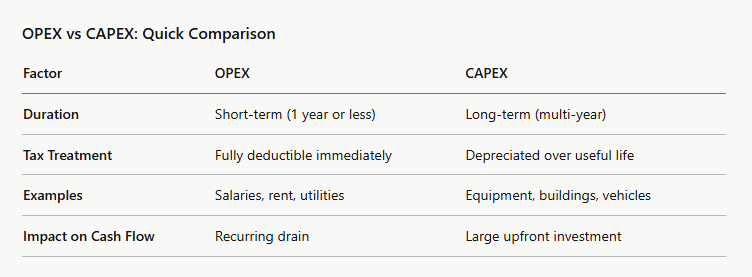
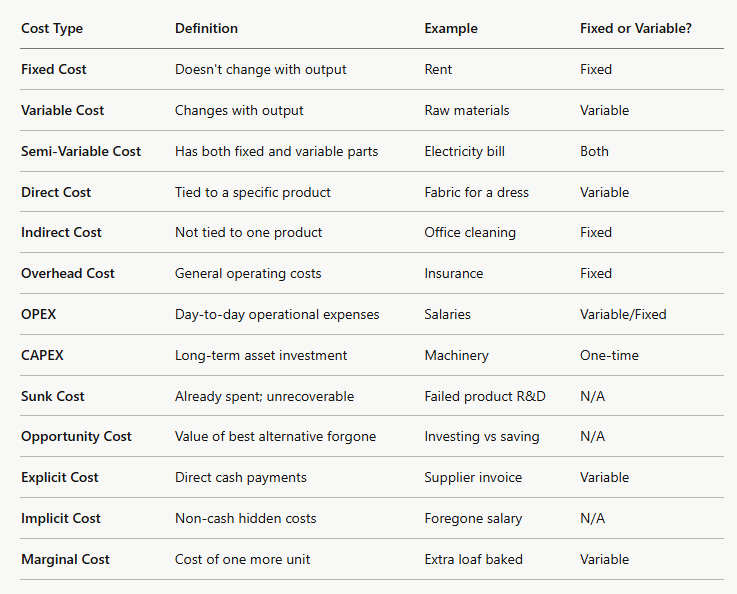
Image

You understand the Business Model Canvas. You know all nine blocks. But staring at a blank template is a completely different challenge from actually filling one in with confidence.

That's where real-world business model canvas case studies come in.

Seeing how Airbnb disrupted hotels, how Netflix pivoted from DVDs to a $30B streaming empire, or how Nespresso built a razor-and-blade machine worth billions, that's when the framework clicks.

In this post, you'll get a deep-dive breakdown of 10 famous companies, mapped against the BMC's nine blocks. By the end, you'll have the clarity and confidence to apply these lessons to your own project.

Table of Contents

  1. Why Use Real BMC Case Studies?
  2. Airbnb BMC Analysis
  3. Netflix BMC Analysis
  4. Tesla BMC Analysis
  5. Starbucks BMC Analysis
  6. Nespresso BMC Analysis
  7. Amazon BMC Analysis
  8. Spotify BMC Analysis
  9. Uber BMC Analysis
  10. Slack BMC Analysis
  11. Airbnb Experiences BMC Analysis (Lean Canvas Comparison)
  12. Best Practices for Your Own BMC
  13. Common Mistakes to Avoid
  14. FAQ
  15. Conclusion

Why Use Real BMC Case Studies?

The Business Model Canvas is most powerful when you can see it in action.

Studying how companies like Tesla or Amazon built their nine blocks helps you:

  • Spot patterns you can replicate in your own model
  • Understand how value propositions connect to revenue streams
  • Learn how pivots look on paper before they happen in the market
  • Avoid the common mistake of treating the BMC as a static document

Let's dig in.

1. Airbnb

Airbnb is one of the most referenced business model canvas examples in startup and MBA programs, and for good reason. It built a multi-billion dollar company without owning a single property.

airbnb business model canvas analysis

Key Insight: Airbnb's model works because its value proposition solves problems for both sides of the platform simultaneously. This is called a multi-sided platform model, and it's what makes it so defensible.

2. Netflix

Netflix is the gold standard of successful business model pivots. It moved from a DVD rental service (transactional) to a subscription streaming platform (recurring revenue) — entirely restructuring its BMC in the process.

Netflix Business Model Innovation Case Study

Key Insight: Netflix shifted its revenue stream from transactional (pay per rental) to recurring subscription, and this single decision transformed its valuation from $1B to over $150B. Revenue stream innovation is often the most leveraged block in the BMC.

3. Tesla

Tesla is an unusual manufacturing business. It sells cars, but its real model is closer to a technology and energy platform.

Tesla Business Model Canvas Example

Key Insight: Tesla's elimination of the dealer network (traditional channel) cut margin leakage and gave it direct customer relationships a competitive advantage no legacy automaker could quickly replicate.

4. Starbucks

Starbucks didn't just sell coffee. It sold a third place — a location between home and work where people want to linger. This framing changed every block of its BMC.

Starbucks BMC Case Study

Key Insight: Starbucks Rewards is one of the best real-world BMC case studies for customer relationships. It created a loyalty loop that turned a commodity product into a daily ritual — and made its customer relationship block nearly impossible to compete with.

5. Nespresso

Nespresso is a textbook example of the razor-and-blade model  , a pattern worth understanding if you sell any physical hardware product.

Nespresso Business Model Canvas

Key Insight: Nespresso's revenue stream design is genius. Machines are sold at low margins to lock in customers, while proprietary capsules generate recurring high-margin revenue for years. This same pattern powers printers, razors, and video game consoles.

6. Amazon

Amazon is arguably the most complex business model canvas example in the modern economy. It operates multiple BMCs simultaneously — retail, cloud, advertising, logistics, and each feeds the others.

Amazon Business Model Ecosystem

Key Insight: Amazon's real moat is its flywheel — lower prices attract more customers, which attracts more sellers, which increases selection, which lowers prices further. The BMC alone can't show this dynamic loop, but mapping it block by block reveals where each piece of the flywheel lives.

7. Spotify

Spotify is one of the best SaaS business model canvas examples because it runs a freemium two-sided model that monetizes both listeners and advertisers.

SaaS Business Model Canvas Example — Spotify

Key Insight: Spotify's biggest challenge is visible directly in its cost structure block — paying ~70% of revenue in royalties leaves razor-thin margins, which is why it has aggressively expanded into podcasts and audiobooks to improve its cost structure over time.

8. Uber

Uber disrupted the taxi industry not by building better cars, but by redesigning the entire business model, specifically the channel, key resources, and customer relationship blocks.

Uber Business Model Canvas Analysis

Key Insight: Unlike Airbnb, Uber's two-sided marketplace faces a constant tension in its customer relationship block — treating drivers as partners vs. contractors fundamentally changes the cost structure. This is a live strategic tension visible right in the BMC.

9. Slack

Slack is a classic bottom-up SaaS model. It didn't sell to IT departments; it spread virally through teams, then converted usage into revenue.

SaaS Business Model Canvas — Slack

Key Insight: Slack's key activity was building an open integration ecosystem. By making it easy to connect every other tool to Slack, it embedded itself into daily workflows, making it extremely hard to replace, even when competitors (Microsoft Teams) arrived with a lower price.

10. Airbnb Experiences — Lean Canvas vs BMC

Lean Canvas vs Business Model Canvas Examples

When Airbnb launched Experiences, it operated almost like a startup within a startup. This is a great opportunity to contrast the Lean Canvas (used by early-stage startups) with the Business Model Canvas (used by established companies).

Airbnb Experiences (Lean Canvas approach):

  • Problem: Travelers want authentic local experiences, not tourist traps
  • Customer Segments: Experience-hungry travelers + local experts/hosts
  • Unique Value Proposition: Immersive activities led by local insiders
  • Unfair Advantage: Existing Airbnb trust infrastructure and 150M+ guest base
  • Revenue Streams: 20% commission on each experience booking
  • Key Metrics: Bookings per host, guest repeat rate, review score

Key Insight: Startups should use the Lean Canvas until they have product-market fit. Once the model is validated, migrating to the full BMC helps you plan scale, partnerships, and cost structure more rigorously.

Best Practices for Building Your Own BMC

Drawing inspiration from these business model canvas examples, here's what the best models have in common:

  1. Start with the Value Proposition. Everything else flows from what you're offering and who it's for. Don't fill in channels before you're clear on value.
  2. Map your revenue streams last. Revenue is the output of a working model — not the starting point.
  3. Treat the BMC as a living document. Netflix rewrote its BMC multiple times. So should you.
  4. Test the most uncertain block first. If you're unsure whether customers will pay, validate that before building infrastructure.
  5. Use sticky notes or a digital tool. Miro, Canvanizer, and Strategyzer's own tool let you iterate quickly without starting over.

Common Mistakes to Avoid

These show up consistently when reviewing beginner BMC attempts:

  • Writing a business plan inside the boxes. Each block should be 1–3 bullet points maximum — not paragraphs.
  • Confusing channels with customer relationships. Your channel is how you reach customers. Your relationship is what kind of interaction they have with you once you do.
  • Ignoring the cost structure. Spotify's margin problem is written right into its costs. Ignoring this block means ignoring your biggest risks.
  • Treating partnerships as a "nice to have." Nespresso's recycling partnerships and Tesla's Panasonic battery deal aren't optional — they're core to the model.
  • Copying a competitor's BMC verbatim. Amazon and Walmart both sell things online, but their BMCs are radically different. Your context shapes your model.

FAQ

Q: What is the best business model canvas example for a SaaS startup? Slack and Spotify are both excellent SaaS business model canvas examples. Slack demonstrates product-led growth with a freemium-to-enterprise conversion, while Spotify shows how to manage a two-sided platform with recurring subscription revenue.

Q: How do I use business model canvas case studies to build my own BMC? Start by identifying a company in a similar industry or with a similar structure (marketplace, SaaS, hardware+consumables, etc.). Use their BMC as a reference template, then replace each block with your own assumptions. Treat it as a hypothesis, not a final answer.

Q: What is the difference between Airbnb and Uber's business model canvas? Both are two-sided platforms, but they differ in key resources and cost structure. Airbnb's key resource is trust (homes, reviews). Uber's key resource is a real-time logistics algorithm and a massive driver network. Uber also faces far greater regulatory and labor cost pressure in its cost structure.

Q: Is the Lean Canvas better than the Business Model Canvas for startups? The Lean Canvas is better for pre-traction startups because it focuses on problems, solutions, and key metrics — the things that matter most when you don't know if your idea works yet. Once you have customers and revenue, the full BMC gives you a more complete strategic view.

Q: Can a company have more than one Business Model Canvas? Yes. Amazon essentially runs five separate business models (retail, AWS, advertising, Prime, logistics) that interlock. Large companies often map each business unit with its own BMC, then analyze how they support each other.

Q: Why is Tesla's business model so different from traditional car manufacturers? Traditional automakers sell through franchised dealerships (third-party channel) and rely on volume manufacturing. Tesla sells direct-to-consumer, earns recurring software revenue (FSD upgrades), and integrates energy products. Its BMC is closer to Apple's than to Ford's.

Conclusion

The best way to learn the Business Model Canvas isn't to study the framework, it's to study the companies that used it to build empires.

From Airbnb's trust-based two-sided platform to Nespresso's razor-and-blade machine, from Netflix's subscription pivot to Amazon's flywheel ecosystem, each of these business model canvas case studies reveals a different dimension of the same strategic tool.

The nine blocks aren't just an academic exercise. They're the blueprint for how value is created, delivered, and captured — and every company in this list proves that point in a different way.

Now it's your turn. Pick the BMC pattern that most closely matches your business, adapt it to your context, and start mapping.

Image

Most startups don't fail because of bad execution. They fail because they built something nobody wanted.

That's a hard truth, but it's also completely avoidable.

Business model validation is the process of testing your core assumptions before you invest serious time, money, or resources into building a full product. It's how smart founders de-risk their ideas early, and it's what separates startups that survive from those that don't.

Whether you have a brand-new business idea or you're refining an existing model, this guide will walk you through a clear, actionable framework for validating your business from the ground up.

Quick Answer: What Is Business Model Validation?

Business model validation is the process of systematically testing the key assumptions behind your business — your target customer, their problem, your solution, and your revenue model — using real-world experiments before committing to full-scale development.

The goal is simple: find out if your idea works before you spend everything building it.

Table of Contents

  1. Why Business Model Validation Matters
  2. The Core Assumptions You Need to Test
  3. Step-by-Step Validation Framework
  4. Real-World Examples
  5. Best Practices and Expert Tips
  6. Common Mistakes to Avoid
  7. Validation Methods Compared
  8. FAQ

Why Business Model Validation Matters

Here's a sobering statistic: roughly 90% of startups fail. And according to CB Insights, the top two reasons are no market need and running out of cash , both of which validation directly prevents.

Validation isn't about proving you're right. It's about finding out where you're wrong quickly and cheaply.

Think of it this way. Would you build a house without testing the foundation first? Probably not. Your business model is the foundation. Everything else — your product, your team, your marketing — sits on top of it.

The lean startup methodology, popularized by Eric Ries, is built entirely on this idea: build less, learn faster, waste nothing.

The Core Assumptions You Need to Test

Before you start running experiments, you need to identify what assumptions your business is built on. Most business models rest on four categories of assumptions:

  • Customer assumptions — Who is your target customer? What do they look like, where do they hang out, and what do they care about?
  • Problem assumptions — Does the problem you're solving actually exist? Is it painful enough that people are actively looking for a solution?
  • Solution assumptions — Will your product or service actually solve the problem? Is it better than what's already out there?
  • Revenue assumptions — Will customers pay for it? How much? Through what model?

A great tool for mapping these out is the Business Model Canvas — a one-page visual framework that captures all nine building blocks of a business model. Before testing anything, fill out a Business Model Canvas and circle every assumption you aren't yet sure about. Those circles are your validation roadmap.

Step-by-Step Validation Framework

Here's a practical, phase-by-phase approach to business model validation that any founder can follow.

Phase 1: Define Your Riskiest Assumptions

Start by listing every assumption your business depends on. Then rank them by risk. Specifically, which ones would sink the business if they turned out to be wrong?

These are your riskiest assumptions, and they go to the top of your validation queue. Don't waste time testing whether customers prefer blue or green packaging if you haven't confirmed they want the product at all.

Action step: Write down your top 3–5 riskiest assumptions. Keep them specific. Instead of "customers want this," write "working parents aged 30–45 in urban areas will pay $25/month for a meal prep service."

Phase 2: Run Customer Discovery Interviews

Before you build anything, talk to real people. This is called the customer discovery framework, and it's one of the most powerful validation techniques available. It costs almost nothing.

Your goal in these conversations is to listen, not to pitch. Ask open-ended questions like:

  • "Tell me about the last time you experienced [the problem]."
  • "How are you currently solving this?"
  • "What would an ideal solution look like for you?"
  • "Have you ever paid for anything that tried to solve this?"

Aim for at least 15–20 conversations with people who match your target customer profile. Look for patterns — if 12 out of 15 people describe the same frustration, that's a strong signal.

What you're validating: Problem reality and customer profile.

Phase 3: Test with a Minimum Viable Product (MVP)

Once you've confirmed the problem is real, it's time to test your solution, but not by building the full thing. Instead, build the smallest possible version that lets you learn.

This is your Minimum Viable Product (MVP).

MVP testing doesn't mean building a bad product. It means building the right product for this stage one that answers your biggest question with the least amount of effort.

There are several types of MVPs:

  • Landing page MVP — Build a simple webpage describing your product and drive traffic to it. Measure how many people sign up or click "buy."
  • Concierge MVP — Deliver the service manually to a small group of customers, simulating what the product would do.
  • Wizard of Oz MVP — The customer believes they're using a real product, but you're fulfilling it manually behind the scenes.
  • Prototype MVP — A clickable mockup or demo that looks real but doesn't function fully.

Each approach is designed to test a specific assumption. Choose based on what you need to learn, not what's most impressive.

What you're validating: Solution viability and early demand.

Phase 4: Test Your Revenue Model

Getting people interested in a free product proves very little. The real test is whether they'll pay.

Use techniques like:

  • Pre-sales or crowdfunding: Offer the product before it's built. If people pay now, demand is real.
  • Pilot pricing: Charge a small group of early customers and see what happens.
  • Price sensitivity surveys: Use the Van Westendorp model to find the price range customers consider acceptable.

Don't be afraid to charge early. In fact, getting paid before building is one of the strongest validation signals possible.

What you're validating: Willingness to pay and pricing model.

Phase 5: Measure for Product-Market Fit

As you iterate through your MVP tests, watch for signs of product-market fit — the point where your solution truly resonates with a market.

Sean Ellis, who coined the metric, suggests a simple test: ask your early users, "How would you feel if you could no longer use this product?" If more than 40% say "very disappointed," you're approaching product-market fit.

Other signals include:

  • Users recommending the product to others without being asked
  • High retention rates over time
  • Customers finding workarounds to keep using it

When you see these patterns, it's time to scale.

Real-World Examples

Dropbox validated its idea before writing a single line of code. Drew Houston created a simple explainer video showing how Dropbox would work. Overnight, signups jumped from 5,000 to 75,000. That was all the validation he needed.

Airbnb's founders tested their idea by renting out air mattresses in their own apartment during a busy conference. They made a few hundred dollars and, more importantly, proved that strangers would actually pay to stay in someone else's home. The whole category was unproven until it wasn't.

Zappos didn't build warehouse infrastructure to test shoe demand online. Founder Nick Swinmurn simply posted photos of shoes from local stores. When orders came in, he bought the shoes and shipped them himself. Once demand was confirmed, they built the real system.

The common thread? All three tested the core assumption — will people actually want this? — before committing to the full build.

Best Practices and Expert Tips

  • Get out of the building. Steve Blank's famous advice still applies. No validation happens at your desk.
  • Invalidate, don't confirm. The goal isn't to prove yourself right. Actively try to find holes in your model.
  • Use the "Mom Test." Rob Fitzpatrick's framework teaches you to ask questions in a way that removes social bias — people will tell you what you want to hear unless you ask the right way.
  • Document everything. Keep a running log of your interviews, experiments, and key learnings. Patterns only emerge when you can review the data.
  • Set clear success criteria before each test. Decide upfront what a "pass" looks like. Otherwise, you'll rationalize any result as good news.
  • Fail fast and iterate. A failed test isn't a failed business. It's data. The faster you collect it, the faster you improve.

Common Mistakes to Avoid

Asking leading questions. "Would you use an app that saves you two hours a week?" Almost everyone will say yes. That tells you nothing. Ask about their current behavior instead.

Validating with friends and family. They'll be supportive. They won't be honest. Find people who have no emotional investment in your success.

Building too much before testing. The longer you wait to test with real users, the more expensive your mistakes become.

Confusing interest with intent. "I'd definitely use that!" is not the same as a credit card number. Always push for a commitment — even a small one.

Ignoring negative feedback. If three people tell you your pricing is too high or your onboarding is confusing, that's not noise — that's a signal. Listen to it.

Skipping the revenue test. Validating the problem and solution without testing willingness to pay leaves a critical assumption untested.

Validation Methods Compared

Business Model Validation Methods Compared

Use this table to choose the right method for what you need to learn next. Don't over-invest in testing when a cheaper method gives you the same answer.

FAQ

What is the first step in business model validation? 

The first step is identifying your riskiest assumptions — the beliefs your business depends on that you haven't yet proven. Start with the Business Model Canvas to map your full model, then circle every unproven assumption. Prioritize the ones that would kill the business if wrong.

How long does business model validation take? 

It depends on your industry and model, but a basic validation cycle — from customer interviews to MVP testing — typically takes 4 to 12 weeks. The lean startup process is designed to compress this timeline by focusing on the highest-risk assumptions first and learning in short iterations.

What is the difference between market validation and business model validation? 

Market validation focuses on confirming that a market exists and that customers have a real problem. Business model validation is broader — it tests the entire business system, including your revenue model, cost structure, customer acquisition strategy, and solution viability.

Do I need to build a product to validate my business idea?

No. In fact, building too early is one of the most common validation mistakes. Many powerful validation techniques, like customer interviews, landing page tests, and pre-sales, require little to no product development.

What is product-market fit, and how do I know when I've reached it? 

Product-market fit is the point at which your product satisfies a strong market demand. Indicators include high user retention, organic referrals, and using Sean Ellis's test, at least 40% of users saying they'd be "very disappointed" if the product went away.

Can you validate a B2B business model differently from a B2C one? 

Yes. B2B validation often relies more heavily on direct sales conversations, pilot programs, and Letters of Intent (LOIs). B2C validation tends to lean on landing pages, social media tests, and pre-sales campaigns. The core principles are the same, the channels and decision-making timelines differ.

Conclusion

Business model validation isn't a luxury for well-funded startups. It's a survival skill for every founder.

The framework is simple: identify your riskiest assumptions, talk to real customers, test your solution with an MVP, confirm people will actually pay, and watch for product-market fit signals. Do this in cycles — small, fast, and cheap — before you go all in.

The founders who skip this process are the ones who spend two years building something nobody wants. The ones who embrace it are the ones who ship products that stick.

You don't need to be certain. You just need to be willing to test, learn, and adapt. Start with your riskiest assumption. Start this week. The market will tell you everything you need to know — if you ask it the right way.

Image

Most people learn the Business Model Canvas the wrong way.

They watch a YouTube video, learn the nine box names, fill them in during a workshop, and move on. They treat it like a form to complete a business version of a tax return. Check the boxes, done.

But that's not a business model. That's a vocabulary exercise.

The Business Model Canvas 9 blocks were never designed to be nine separate answers. They were designed to work as one connected system — a living map of how your business creates value, delivers it, and earns money from it. When you understand how the blocks influence each other, the canvas transforms from a worksheet into a thinking tool. Your strategy sharpens. Your blind spots surface. Your decisions become easier to justify.

This guide is not going to define each block for you. You can find that anywhere. Instead, we're going to walk through the relationships — the logic that runs underneath the canvas and ties all nine blocks together into one coherent story.

The Quick Answer

The Business Model Canvas has two sides connected by a center. The right side — Customer Segments, Value Proposition, Channels, Customer Relationships, and Revenue Streams — is about who you serve and how you earn. The left side — Key Resources, Key Activities, Key Partners, and Cost Structure — is about how you operate. The Value Proposition sits in the middle, bridging both sides. Everything on the left exists to build and support the value you deliver. Everything on the right exists to communicate, deliver, and monetize it. The canvas only works when all nine blocks are consistent with each other.

Table of Contents

  1. Why the Canvas Has Two Sides
  2. The Center Block That Holds Everything Together
  3. How the Right Side Works as a System
  4. How the Left Side Works as a System
  5. How the Two Sides Connect Through the Value Proposition
  6. Reading the Canvas as a Story: Step by Step
  7. Real-World Example 
  8. Expert Tips
  9. Common Mistakes to Avoid
  10. FAQ
  11. Conclusion

Why the Canvas Has Two Sides

Before you can understand how the blocks connect, you need to see the canvas the way Alex Osterwalder designed it — not as nine random boxes, but as a deliberate structure with a clear architecture.

The canvas is split into two halves. The right side is your market-facing world. It's about your customers, your relationships with them, how you reach them, and ultimately how they pay you. The left side is your operational world. It's about what you need internally — the resources you own, the activities you run, and the partners you rely on — to actually deliver what you promised.

Think of it this way. Every business has a "front stage" and a "back stage." The right side of the canvas is the front stage — what customers see, experience, and pay for. The left side is the back stage — the machinery, the people, the processes that make the front stage performance possible. The audience never sees the backstage. But if the backstage breaks down, the front stage falls apart immediately.

This two-sided structure is not cosmetic. It reflects a deep truth about how businesses actually work. The reason a customer decides to pay you is entirely dependent on the right side. But whether you can actually deliver what you promised, and do it at a profit, is entirely determined by the left side. When both sides are aligned and consistent, you have a viable business model. When they're misaligned, and they often are, you have a business that looks good on paper but struggles in reality.

The Center Block That Holds Everything Together

The Value Proposition sits at the exact center of the canvas, and that placement is intentional. It is the gravitational core around which every other block orbits.

Your Value Proposition is the specific promise you make to a specific customer. It's not your product. It's not your feature list. It's the answer to one simple question: why should this person choose you over doing nothing, or choosing someone else? It's the reason a customer exchanges their money and attention for what you offer.

Here's what makes it so central. Look left from the Value Proposition and you'll find everything you need to build and sustain it — your resources, your activities, your partners. Look right and you'll find everything you need to communicate, deliver, and earn from it — your channels, your relationships, your revenue. The VP doesn't just sit in the middle of the canvas visually. It sits in the middle of your entire business logic.

This means that if your Value Proposition is vague or weak, both sides of the canvas suffer. Your Key Activities lose focus because you're not sure what you're supposed to be doing well. Your Channels feel arbitrary because you're not sure what message you're delivering through them. Your Revenue Streams feel uncertain because customers aren't fully convinced the value justifies the price. A sharp, specific Value Proposition acts like a spine — it holds the whole structure upright.

How the Right Side Works as a System

Most people read the right side blocks individually. Customer Segments is one thing. Channels is another. Revenue Streams is something else. But that's not how they work. The right side functions as a chain. Each block connects to and depends on the others.

It starts with your Customer Segment. This is not just a demographic. It's a specific group of people with a specific problem, desire, or job they're trying to get done. The more precisely you define this segment, the more useful every other block becomes. When you know exactly who you're serving, the right Value Proposition becomes obvious. When the VP is clear, the right Channels become easier to identify. When you understand your Channels, the right Customer Relationship model follows naturally. And when you understand how customers interact with you and what value they receive, the right Revenue Stream becomes logical rather than arbitrary.

Let's slow down on Channels and Customer Relationships for a moment, because these two are often treated as administrative details when they're actually strategic decisions. Channels are not just where you sell — they're the full journey a customer takes from first hearing about you to receiving your product and coming back for more. Your channel strategy directly affects your cost structure (more on that later), your conversion rates, and your customer experience. A badly designed channel loses customers who would have otherwise bought.

Customer Relationships, meanwhile, defines the tone and type of connection you maintain. Are you self-service, like a vending machine? Are you highly personal, like a private banker? Are you community-driven, like a fitness app with social features? This decision should be driven by your Customer Segment's expectations, not by your preferences. A segment that expects warmth and hand-holding will churn from a cold, automated experience. A segment that values speed and independence will find a high-touch relationship intrusive.

Revenue Streams are the last link in the right-side chain, but they're not just a financial afterthought. The way you earn money — subscription, transaction, licensing, freemium, advertising — should match the nature of the value you deliver. If your value is ongoing and cumulative (like a project management tool that gets more useful over time), a subscription makes sense because the customer keeps getting value. If your value is delivered once (like a physical product), a one-time payment is more natural. The mismatch between the revenue model and value delivery is one of the most common reasons customers feel wronged and churn.

How the Left Side Works as a System

The left side of the canvas is less glamorous than the right, but it's just as strategic. It answers one foundational question: what does it actually take to deliver what you promised?

Key Resources are the assets that make your business possible. These might be physical (factories, delivery fleets), intellectual (patents, software, brand), human (specialized talent), or financial (capital, credit lines). The critical insight here is that Key Resources should be identified by working backwards from the Value Proposition. Ask yourself: what does a customer actually get from us, and what do we need to have in order to deliver that? If you're a luxury hotel, your key resource might be prime real estate and a trained staff. If you're a data analytics company, your key resource is a proprietary algorithm and the engineers who maintain it. Resources that don't connect back to the Value Proposition are overhead, not strategy.

Key Activities follow the same logic. They're not everything your company does — they're the things you must do exceptionally well in order for the Value Proposition to hold. A food delivery platform must execute logistics flawlessly. A pharmaceutical company must do rigorous R&D. A consultancy must solve client problems with precision and speed. If an activity doesn't directly support your VP, it's a candidate for outsourcing or elimination. This is a harder question than it sounds, because companies accumulate activities over time, and not all of them deserve the energy they consume.

Key Partners extend your reach. Nobody builds everything themselves. Partners allow you to access resources and activities that would be too expensive, too slow, or too risky to develop internally. A startup might partner with a cloud provider instead of buying servers. A fashion brand might partner with a manufacturer instead of running a factory. The logic behind Key Partners is simple: do what you're uniquely good at, and let trusted partners handle the rest. The connection to the rest of the left side is direct — partners often fill gaps in your Key Resources or execute certain Key Activities on your behalf.

Cost Structure is where all the left-side decisions come together into a financial reality. Every resource you acquire costs money. Every activity you run costs money. Every partner relationship has a price. The Cost Structure block is the honest accounting of what it costs to keep your business model alive and functioning. When people say a business model is "sustainable," what they really mean is that the Revenue Streams on the right side exceed the Cost Structure on the left — and do so with enough margin to survive.

How the Two Sides Connect Through the Value Proposition

Now here's where the thinking gets interesting.

The Value Proposition is not just a mission statement. It's a contract between the two sides of the canvas. The left side says: "We will build and maintain everything needed to keep this promise." The right side says: "We will communicate this promise, deliver it to the right people, and earn revenue from the value it creates."

When both sides are fulfilling their role, the canvas is internally consistent. But inconsistencies are more common than you'd think, and they're usually invisible until things start breaking down. A company might define an ambitious Value Proposition — premium, personalized, fast — but then cut costs on their Key Resources in ways that make that promise impossible to keep. Or they might identify a high-value Customer Segment but route them through a Channel that feels cheap and impersonal, creating a dissonance between what's promised and what's experienced.

The most important habit you can build when working with the canvas is checking every block against the VP. Does this Key Activity support the VP? Does this Channel deliver the experience the VP implies? Does this Revenue model match the value customers actually receive? When every block passes that test, you don't just have a filled-in canvas — you have a coherent strategy.

Reading the Canvas as a Story: Step by Step

The best way to internalize the connections between the 9 blocks is to read the canvas as a narrative — a story of how value is created and delivered.

Start with your Customer Segment. Get specific. Who exactly is this person? What problem are they living with? What does a day in their life look like, and where does your business fit in?

From there, define your Value Proposition for that segment. What do you offer that genuinely improves their situation? Why would they care? Be honest and specific. Generic value propositions like "we make things easier" don't pass the test.

Now move to Channels. How does this exact customer discover, evaluate, buy, and receive your offer? Map the full journey, not just the sale. A broken post-purchase experience destroys retention even when the product is great.

Then ask what kind of relationship this customer expects. Do they want to be guided, or do they prefer to figure things out themselves? Does your relationship model reinforce the premium or value nature of your VP?

Next, identify the Revenue Stream. Given the value this customer receives, what would they pay, and in what form — a subscription, a one-time fee, a usage-based price?

Now flip to the left side and work backwards. To deliver the VP, what must you do exceptionally well? Those are your Key Activities. What must you own or have access to? Those are your Key Resources. What gaps can partners fill? Those are your Key Partners.

Finally, add up the realistic cost of running everything on the left side, and compare it to the revenue realistically flowing from the right. If the math works, your business model is viable. If it doesn't, something on either side needs to change.

Real-World Example — Spotify

Let's put the framework to work with a company everyone knows.

Spotify's Customer Segments are primarily music listeners — split between free users who tolerate ads and premium subscribers who pay for an uninterrupted experience. There's also a second customer type on the other side of the market: artists and record labels who want their music heard.

Their Value Proposition to listeners is expansive catalog, intelligent personalization, and frictionless access — anytime, anywhere, on any device. To artists, the VP is distribution at massive scale.

To reach listeners, Spotify uses digital Channels almost exclusively — mobile apps, desktop clients, browser streaming, and deep integrations with smart speakers and car systems. The Customer Relationship is algorithmically personal. Spotify doesn't call you. It learns from you. Features like Discover Weekly create a sense of a relationship without any human involvement, which is an elegant and scalable design choice.

Revenue Streams come from two directions: premium subscriptions from paying users, and advertising revenue generated by free users whose attention is monetized.

On the left side, Spotify's Key Resources are its licensed music catalog, its recommendation algorithms, and its engineering talent. These three assets are inseparable from the VP — without the catalog, there's nothing to listen to; without the algorithm, there's no personalization; without the engineers, neither works. Key Activities include licensing negotiations with labels, continuous improvement of the recommendation engine, and app development. Key Partners are the record labels (who own the content), device manufacturers (who enable integrations), and payment processors (who handle subscriptions globally).

The Cost Structure is dominated by music royalties — the price Spotify pays to license the catalog that makes its VP possible. This is a high-cost business on the left side, which is why the Revenue Streams on the right must scale enormously to sustain it.

Notice how every block in Spotify's canvas points back to the same central promise: unlimited music, intelligently personalized, effortlessly accessible. That's what good BMC design looks like — a system where every block earns its place.

Expert Tips for Designing Connected Business Models

The most important advice is deceptively simple: never fill in a block in isolation. Every time you write something in one block, immediately ask how it affects at least two or three adjacent blocks. If you change your Customer Segment, your Channels and Customer Relationships probably need to shift too. If you add a Key Resource, ask whether it introduces new costs or enables a new Revenue Stream. The canvas is a system, and systems have ripple effects.

Second, use the VP as a filter for every left-side decision. Before you commit to a Key Activity, ask whether it directly supports your Value Proposition. If the honest answer is "not really," that activity is a distraction. Businesses accumulate activities the way houses accumulate clutter — gradually, without intention, until the important things get buried.

Third, stress-test your Revenue Stream against your Cost Structure before you feel confident in your model. Many business models look attractive on the right side but collapse when you add up the realistic costs on the left. Do the math honestly, with real numbers, not optimistic estimates.

Finally, revisit the canvas regularly. It's not a document you create once. It's a thinking tool you return to as your business evolves, as markets shift, and as you learn more about your customers. The most valuable use of the canvas isn't the first version — it's the comparison between the first version and the fifth.

Common Mistakes to Avoid

The most damaging mistake is treating the nine blocks as independent. This happens when people fill in the canvas section by section without ever stepping back to check whether the blocks are consistent with each other. A VP that promises speed and the Channels and Activities don't support speed is a broken model, even if each individual block sounds reasonable.

Another common error is writing "everyone" under Customer Segments. This might feel inclusive, but it's strategically useless. When you try to serve everyone, your Value Proposition becomes vague, your Channels become scattered, and your Customer Relationships become generic. The businesses with the sharpest canvases have ruthlessly specific customer definitions.

Many first-time founders also neglect the Cost Structure until they run out of money. The left side of the canvas feels less exciting than the right — there's no customer, no revenue, no vision there. But ignoring it is exactly how businesses design models that are admired and unprofitable simultaneously.

Finally, watch out for copying another company's canvas without understanding why their model works. A competitor's Key Partners might be irreplaceable for them because of a relationship built over ten years. Their Revenue Stream might depend on scale they've already achieved. Context matters. Borrow ideas, but build your own logic.

FAQ

What are the Business Model Canvas 9 blocks?

The nine blocks are Customer Segments, Value Proposition, Channels, Customer Relationships, Revenue Streams, Key Resources, Key Activities, Key Partners, and Cost Structure. Together they describe how a company creates, delivers, and captures value. The framework was developed by Alex Osterwalder and Yves Pigneur.

Which of the 9 blocks is the most important?

The Value Proposition is generally considered the most critical block because it sits at the center and connects both sides of the canvas. Every other block either supports or monetizes it. A weak Value Proposition makes all eight other blocks harder to define well.

How does the Value Proposition connect to Customer Segments?

The Value Proposition should directly address the specific pains, gains, or jobs-to-be-done of your Customer Segment. One way to map this precisely is through the Value Proposition Canvas — a separate tool that zooms into this exact relationship and helps you verify that what you offer matches what your customer actually needs.

What is the difference between Key Resources and Key Activities?

Key Resources are what you have — the assets, intellectual property, talent, and capital your business owns or accesses. Key Activities are what you do — the processes, capabilities, and actions your business must execute well. Resources enable activities. Activities use resources. Both should directly support the Value Proposition.

How does Cost Structure relate to the other blocks?

Cost Structure is the financial consequence of your entire left side. Every Key Resource has a cost to acquire or maintain. Every Key Activity costs time and money to run. Every Key Partnership has a price. The goal is for your Revenue Streams on the right side to exceed your Cost Structure on the left — that gap is your business model's profitability.

Can one Business Model Canvas cover multiple Customer Segments?

Yes, and many businesses serve multiple segments simultaneously. However, if different segments require meaningfully different Value Propositions, Channels, or Relationships, it's often cleaner and more useful to create a separate canvas for each major segment, rather than cramming different strategies into a single document.

Conclusion

The Business Model Canvas 9 blocks are not a checklist. They never were.

They are a connected system — a way of mapping how your business creates value, who it creates it for, how it delivers it, and how it sustains itself financially. The right side tells the customer's story. The left side tells the operational story. The Value Proposition connects both sides and gives the whole canvas its purpose.

When you learn to read the canvas as a story, following the logic from customer to value to delivery to revenue, and from resources to activities to partners to costs, you stop filling in boxes and start designing a business. You start asking better questions. You start catching inconsistencies before they become expensive. You start seeing your business as a system, which is the only way to truly understand it.

Go back to your canvas now. Look at each block not in isolation, but in relation to the others. Ask whether they're all telling the same story. If they are, you have a coherent model. If they're not, you've just found your most important strategic problem.

That's what the Business Model Canvas 9 blocks, used properly, are designed to help you do.

Image

Most businesses that fail do not fail because they lack customers. They fail because they never truly understood where their money was going.

Cost structure analysis is one of the most powerful tools a business owner, manager, or analyst can use. It forces you to look at every dollar your business spends and ask a simple question: is this helping us grow, or is it quietly bleeding us dry?

In this guide, you will learn exactly how to analyze, design, and optimize your cost structure so your business can scale without losing profitability. Whether you are running a startup or managing a $10 million operation, this framework applies to you.

Quick Answer

What is cost structure analysis?

Cost structure analysis is the process of identifying, categorizing, and evaluating all costs within a business to understand how they affect profitability and scalability. It includes examining fixed costs, variable costs, direct costs, and indirect costs — and using that information to make smarter financial and strategic decisions.

Table of Contents

  1. What Is Cost Structure?
  2. Fixed and Variable Costs Explained
  3. Direct vs Indirect Costs
  4. Value-Driven vs Cost-Driven Business Models
  5. Cost Structure in the Business Model Canvas
  6. How to Conduct a Cost Structure Analysis (Step-by-Step)
  7. Unit Economics and Scalability
  8. Economies of Scale in Business
  9. Operating Leverage Strategy
  10. Real-World Examples
  11. Cost Structure Optimization for Startups
  12. Common Mistakes to Avoid
  13. Expert Tips
  14. FAQ

1. What Is Cost Structure?

Cost structure refers to the types and proportions of costs a business incurs to operate and deliver value. It is not just a list of expenses. It is a strategic picture of how your business spends money and why.

Every business has a cost structure whether it has defined one or not. The problem is that most businesses discover their cost structure only when something goes wrong — a cash flow crisis, shrinking margins, or an unprofitable product line.

Understanding your cost structure before problems arise gives you control. It helps you decide where to invest, where to cut, and how to price your products or services correctly.

2. Fixed and Variable Costs Explained

The most fundamental part of any cost structure analysis is separating your costs into two buckets: fixed and variable.

Fixed costs stay the same regardless of how much you produce or sell. Rent, salaries, insurance, and software subscriptions are classic examples. Even if your revenue drops to zero in a given month, these costs do not disappear.

Variable costs move in direct proportion to your output or sales volume. Raw materials, shipping fees, payment processing charges, and sales commissions are all variable. If you produce nothing, you pay nothing in variable costs.

Understanding this split matters because it reveals how your business behaves under pressure. A business with very high fixed costs and low variable costs has a rigid cost structure. It needs consistent revenue to survive, but it can become highly profitable once it crosses a certain threshold. A business with mostly variable costs is more flexible but may struggle to build strong margins at scale.

3. Direct vs Indirect Costs

Beyond fixed and variable, costs can also be categorized as direct or indirect.

Direct costs are directly tied to producing your product or service. If you run a bakery, flour, eggs, and packaging are direct costs. If you are a consultant, your time spent on client work is a direct cost.

Indirect costs, sometimes called overhead, support the business but are not tied to any single product. Office management, IT infrastructure, HR, and executive salaries are typical examples.

This distinction matters for pricing. If you only account for direct costs, you may set a price that covers production but leaves overhead uncovered. Many businesses underprice themselves for exactly this reason.

4. Value-Driven vs Cost-Driven Business Models

When designing a cost structure, you first need to decide what your business prioritizes.

A cost-driven model focuses on minimizing costs wherever possible. Companies like budget airlines, discount retailers, and fast-food chains operate this way. They compete on price and volume, and their entire operation is built around keeping costs as low as possible.

A value-driven model prioritizes delivering a premium experience, even if it means higher costs. Luxury hotels, high-end software companies, and boutique service firms fall into this category. Customers pay more because they perceive greater value, and the business accepts higher costs as part of delivering that experience.

Neither model is inherently better. The mistake is running a value-driven product with a cost-driven mindset — or vice versa. Your cost structure needs to match your strategic positioning.

5. Cost Structure in the Business Model Canvas

If you have worked with the Business Model Canvas, you know that cost structure sits in the bottom-right corner. It is connected to everything else in the canvas.

Your key activities generate costs. Your key resources generate costs. Even your customer relationships and channels create costs that must be accounted for.

When filling in the cost structure block on your Business Model Canvas, you should answer three questions. First, what are your most significant costs? Second, which key resources are most expensive? Third, which key activities cost the most?

This exercise helps you see the full picture. A lot of founders fill in the revenue streams section with enthusiasm and then hastily fill in the cost structure as an afterthought. That is a dangerous habit.

6. How to Conduct a Cost Structure Analysis (Step-by-Step)

Here is a practical framework you can apply to your own business.

Step 1: List every cost you incur

Start with your financial statements and bank records. Write down every single expense, no matter how small. This includes subscriptions you forgot about, one-time purchases, and recurring fees.

Step 2: Categorize each cost

Label each cost as fixed or variable, and as direct or indirect. Create a simple spreadsheet with columns for cost name, category, monthly amount, and whether it scales with revenue.

Step 3: Calculate your cost breakdown percentages

Add up your total costs and calculate what percentage each major category represents. How much of your total spend goes to payroll? To software? To production? This gives you a clear picture of where your money actually goes.

Step 4: Map costs to revenue streams

Match your costs to the products or services they support. Some costs will be shared across multiple revenue streams. Allocate shared costs using a logical method, such as the percentage of revenue each product generates.

Step 5: Identify your highest-leverage costs

Look for costs that have a disproportionate impact on your output or quality. These are worth investing in. Then look for costs that consume budget but deliver minimal value. These are the first candidates for optimization.

Step 6: Review and update quarterly

Cost structures are not static. As your business grows and your market changes, your costs will shift. Make cost structure review a regular part of your business operations.

7. Unit Economics and Scalability

Unit economics is the financial performance of a single unit of your business — one customer, one product, one transaction.

The two most important unit economics metrics are Customer Acquisition Cost (CAC) and Customer Lifetime Value (LTV). If your LTV is significantly higher than your CAC, your business model is potentially scalable. If your CAC is close to or higher than your LTV, you have a cost structure problem.

Good unit economics means that as you scale, you become more profitable per unit, not less. Bad unit economics means you are losing money on every customer and hoping to make it up in volume — a dangerous strategy that rarely works.

Before you try to grow, always verify that your unit economics are healthy. Scaling a broken cost structure just accelerates the losses.

8. Economies of Scale in Business

Economies of scale occur when your cost per unit decreases as your production volume increases. This is one of the most powerful advantages a growing business can develop.

Consider a manufacturer that produces 1,000 units per month. Their fixed costs — equipment, factory space, management — get spread across those 1,000 units. If they grow to 10,000 units per month without increasing their fixed costs proportionally, the cost per unit drops significantly.

Economies of scale apply to service businesses too. A software company that builds a platform once can serve 100 customers or 100,000 customers with only marginal increases in infrastructure cost.

Understanding where you can achieve economies of scale is a core part of cost structure analysis. It tells you where growth makes you more profitable, not just bigger.

9. Operating Leverage Strategy

Operating leverage measures how sensitive your profits are to changes in revenue. A business with high operating leverage has mostly fixed costs. When revenue goes up, profits go up dramatically. When revenue goes down, losses can be severe.

A business with low operating leverage has mostly variable costs. Profits grow more slowly as revenue increases, but the business is also more resilient during downturns.

Choosing your operating leverage strategy should be intentional. High-growth technology companies often accept high operating leverage because they expect rapid revenue growth that will eventually make their fixed costs look small. Seasonal or cyclical businesses often prefer lower operating leverage to survive lean periods.

The right answer depends on your industry, risk tolerance, and growth strategy.

10. Real-World Examples

Amazon Web Services is a textbook example of a cost-driven model with massive economies of scale. The infrastructure costs are enormous, but they are spread across millions of customers. The cost per customer drops as the platform grows, which is why AWS becomes more profitable over time.

A boutique consulting firm is a value-driven model. Their primary cost is expert talent, and they charge premium rates because clients pay for expertise, not just hours. Their cost structure is simple but talent-intensive.

A traditional airline and a budget airline tell two very different stories. A legacy carrier runs with high fixed costs — crew salaries, hubs, and lounges — and charges accordingly. A budget carrier strips every cost that does not directly support getting passengers from A to B, enabling dramatically lower ticket prices.

Each of these businesses chose a cost structure that aligns with how they compete. None of them ended up with their cost structure by accident.

11. Cost Structure Optimization for Startups

Startups face a unique challenge: they are spending money before they have proven their revenue model. This makes cost structure discipline even more critical in the early stages.

The first principle for startups is to keep fixed costs as low as possible for as long as possible. Every fixed cost you take on is a commitment you must meet regardless of your revenue. Prefer variable or usage-based pricing for tools and services.

The second principle is to focus obsessively on unit economics before scaling. Many startups raise money and immediately try to grow. If the unit economics are not proven, growth just accelerates the burn.

The third principle is to separate survival costs from growth costs. Survival costs keep the lights on. Growth costs drive new revenue. In a constrained budget, survival comes first.

Finally, review your cost structure every time you hit a major milestone. A cost structure that was right for a 5-person team may actively harm a 50-person company.

12. Common Mistakes to Avoid

One of the most common mistakes is confusing revenue with profit. High revenue with a poor cost structure simply means high losses at scale.

Another mistake is ignoring indirect costs when pricing. If your price only covers direct production costs, you will always be unprofitable once overhead is factored in.

Many businesses also treat cost-cutting as a default growth strategy. Cutting costs can improve margins, but it cannot replace revenue growth and it can damage your ability to deliver value if taken too far.

Finally, failing to review your cost structure regularly is a dangerous habit. Costs that made sense at an earlier stage of growth can become inefficiencies or bottlenecks as the business evolves.

13. Expert Tips

Build a cost model before you build a product. Knowing what it will cost to deliver your offer is as important as knowing what customers will pay for it.

Use contribution margin analysis to evaluate individual products or services. Contribution margin is revenue minus variable costs. Products with high contribution margins are the ones worth scaling.

Benchmark your cost structure against industry averages. If you are spending 40% of revenue on sales and your industry average is 20%, you have a problem worth investigating.

Look for ways to convert fixed costs to variable costs when possible. Cloud infrastructure, freelance talent, and flexible workspace are all ways to reduce fixed commitments during uncertain periods.

Think about your cost structure as a competitive advantage. A leaner, more efficient operation can afford to price more competitively or invest more in growth.

14. FAQ

What is the difference between cost structure and cost management?

Cost structure refers to the composition and nature of a business's costs — what types of costs exist and how they relate to the business model. Cost management is the ongoing process of controlling and reducing those costs. Cost structure analysis is the first step before effective cost management is possible.

How does cost structure affect pricing strategy?

Your cost structure sets the floor for your pricing. You need to price above your total costs — direct, indirect, fixed, and variable — to be profitable. Understanding your cost structure also tells you where you have flexibility to discount or where you cannot afford to.

What is the best cost structure for a SaaS business?

Most SaaS businesses aim for a high fixed cost, low variable cost model. Infrastructure and development are large fixed investments, but the marginal cost of adding a new customer is very low. This creates powerful economies of scale as the customer base grows.

How often should a business review its cost structure?

At a minimum, conduct a formal cost structure review annually. High-growth businesses and startups should review quarterly. Any significant change in revenue, team size, product offering, or market conditions should also trigger a review.

What is the relationship between cost structure and business model canvas?

The cost structure block in the Business Model Canvas captures all costs incurred to operate the business model. It is directly shaped by your key activities, key resources, and key partnerships — all of which drive expenses.

How do you optimize a cost structure without cutting value?

Focus on eliminating waste, not value. Look for duplicate tools, underutilized resources, or processes that could be automated. Renegotiate supplier contracts at scale. Optimize your team structure to match actual output needs. Cost optimization is about efficiency, not deprivation.

Conclusion

Cost structure analysis is not just an accounting exercise. It is a strategic discipline that can determine whether your business survives, scales, or stagnates.

By understanding the difference between fixed and variable costs, aligning your model with either a cost-driven or value-driven approach, and regularly reviewing your unit economics, you give your business a structural advantage that most competitors never develop.

The best time to analyze your cost structure is before you need to. Start with a clear map of where your money goes, connect it to the value you deliver, and use that knowledge to make every spending decision with confidence.

Cost structure analysis is ultimately about building a business that works harder with every dollar it spends — and that is the foundation of long-term profitability.

Image

No business succeeds alone.

Behind every thriving company is a network of carefully chosen partners—suppliers, distributors, technology providers, and strategic allies—who help deliver value that the business couldn't create on its own.

But here's where most entrepreneurs go wrong: they treat every vendor or collaborator as a "partner" without understanding which relationships are truly key to their business model.

This guide breaks down key partnerships in business—what they are, the four main types, how to identify which ones your business actually needs, and how to build them strategically. Whether you're building a startup from scratch or refining your Business Model Canvas, this is the guide you need.

Quick Answer: What Are Key Partnerships in Business?

Key partnerships in business are the external relationships, alliances, and agreements a company relies on to operate its business model, reduce risk, acquire resources, or perform activities it cannot or should not do alone.

They differ from ordinary vendor relationships because they're strategically essential—not just convenient or cost-saving.

The four main types are:

  1. Strategic alliances between non-competitors
  2. Coopetition (partnerships between competitors)
  3. Joint ventures to develop new business
  4. Buyer-supplier relationships for reliable resources

Table of Contents

  1. What Are Key Partnerships in Business?
  2. Why Key Partnerships Matter
  3. The 4 Types of Key Partnerships
  4. Key Partnerships in the Business Model Canvas
  5. How to Identify Your Key Partners (Step-by-Step)
  6. Real-World Business Partnership Examples
  7. Best Practices for Building Strong Partnerships
  8. Common Mistakes to Avoid
  9. Joint Ventures vs. Strategic Alliances: Key Differences
  10. FAQ

What Are Key Partnerships in Business? (Deep Dive)

In any business model, you cannot do everything in-house. You don't have unlimited capital, talent, time, or expertise. Key partnerships fill those gaps.

A key partnership is any external relationship that:

  • Supplies a resource your business fundamentally needs
  • Performs an activity critical to your value delivery
  • Reduces a major risk or operational uncertainty
  • Opens markets or customer segments you can't access alone
  • Creates competitive advantages through collaboration

The word "key" is important here. Not every supplier, freelancer, or contractor is a key partner. A graphic designer you hire once for a logo is a vendor. A supplier who provides a proprietary ingredient that your entire product depends on? That's a key partner.

The Business Model Canvas Framework

In Alexander Osterwalder's Business Model Canvas, Key Partnerships is one of nine building blocks. It sits on the left side of the canvas—alongside Key Activities and Key Resources—because partnerships directly enable the operational side of your business.

The canvas asks one central question about partnerships: "Who are the key partners and suppliers we need to make our business model work?"

Answering that question clearly is what separates focused, efficient businesses from those that try to do everything themselves and fail.

Why Key Partnerships Matter for Your Business

Understanding and managing your key partnerships delivers real, measurable advantages.

1. Optimize Resources

No startup has infinite money, staff, or time. Partnerships let you access resources and capabilities you don't own—without building them from scratch.

Example: A small food brand that partners with a national distributor gets shelf space in thousands of stores without building its own logistics network.

2. Reduce Risk

Markets shift. Supplies dry up. Technologies change. Strategic partnerships spread risk across multiple entities rather than leaving you exposed alone.

Example: Airlines forming alliances like Star Alliance share risk on route development while ensuring customers have broader travel networks.

3. Achieve Scale Faster

Partnerships accelerate growth in ways that organic expansion simply can't match, especially for early-stage startups with limited resources.

Example: A new SaaS product that integrates with Salesforce instantly gains credibility and access to Salesforce's massive customer base.

4. Access Specialized Expertise

You don't need to hire full-time experts for every function. Strategic outsourcing lets you tap world-class talent or technology without long-term overhead.

5. Enter New Markets

Local partners understand local regulations, culture, and customers. International expansion becomes dramatically less risky with the right in-country partner.

Example: Starbucks enters new international markets through joint ventures with local operators who understand regional consumer behavior.

The 4 Types of Key Partnerships in Business

Business Model Canvas key partnerships fall into four distinct categories. Understanding each helps you determine which type fits your specific situation.

Type 1: Strategic Alliances Between Non-Competitors

Two businesses in different industries combine strengths to create mutual value—without competing with each other.

This is the most common type of key partnership and usually the lowest risk.

What it looks like:

  • Shared marketing campaigns
  • Technology integrations
  • Co-branded products or services
  • Cross-referral agreements

Best for: Expanding reach, accessing new customer segments, and combining complementary capabilities.

Real example: Spotify and Uber partnered so passengers could control in-ride music through Spotify. Uber enhanced the rider experience; Spotify gained massive brand exposure. Neither competes with the other.

Type 2: Coopetition (Strategic Partnerships Between Competitors)

Two competing businesses collaborate in a specific area while continuing to compete in others. This sounds counterintuitive—but it's surprisingly powerful.

What it looks like:

  • Industry consortia and standards bodies
  • Shared research and development
  • Co-lobbying for regulatory outcomes
  • Shared infrastructure in low-margin areas

Best for: Solving industry-wide problems, establishing common standards, and reducing costs in non-differentiating areas.

Real example: Samsung and Apple compete fiercely in smartphones. Yet Samsung supplies OLED displays and chips to Apple. They compete in the market but cooperate in the supply chain.

Type 3: Joint Ventures to Develop New Business

Two or more businesses create a new, separate legal entity together to pursue a specific opportunity. Each contributes capital, expertise, or resources.

What it looks like:

  • New product development companies
  • Market-entry vehicles in foreign countries
  • Infrastructure projects requiring massive capital
  • R&D companies splitting costs and IP

Best for: High-investment opportunities too large or risky for one company alone, or market entry requiring local expertise.

Real example: Sony Ericsson was a joint venture between Sony (consumer electronics expertise) and Ericsson (telecommunications technology) to build mobile phones. Each brought critical capabilities the other lacked.

Type 4: Buyer-Supplier Relationships for Reliable Resources

These are partnerships with suppliers to ensure a reliable, high-quality, or exclusive source of key inputs—materials, components, data, or services.

This goes beyond a standard vendor relationship. True supplier key partnerships involve:

  • Long-term contracts and exclusivity
  • Deep integration into each other's operations
  • Shared forecasting and inventory planning
  • Joint quality improvement programs

Best for: Businesses where supply reliability, input quality, or cost stability is essential to delivering value.

Real example: Apple's relationship with TSMC for chip manufacturing is a buyer-supplier key partnership. Apple designs chips; TSMC manufactures them at scale. Apple's entire product lineup depends on this relationship functioning reliably.

Key Partnerships in the Business Model Canvas

When filling in the Key Partnerships block of your Business Model Canvas, you need to think through three specific questions:

Question 1: Who are our key partners?

List the specific organizations or types of partners you depend on. Be precise.

  • Not just "suppliers"—name the type or specific company
  • Not just "distributors"—name the channel or platform

Question 2: Which key activities do partners perform?

Some activities in your business are best left to partners. Identify which of your key activities are partner-delivered.

Example for a mobile app startup:

  • Cloud hosting → AWS or Google Cloud (partner handles infrastructure)
  • Payment processing → Stripe (partner handles transactions)
  • Customer acquisition → App Store + Google Play (partner controls distribution)

Question 3: Which key resources do we acquire from partners?

Some resources are too expensive, rare, or impractical to own. Partners supply them instead.

Examples:

  • Proprietary data or technology licenses
  • Manufacturing capacity
  • Distribution networks
  • Regulatory permits or certifications

The Three Motivations Behind Key Partnerships

Osterwalder identifies three core reasons businesses form key partnerships:

The Three Motivations Behind Key Partnerships

How to Identify Your Key Partners (Step-by-Step)

Not sure which partnerships are truly "key" for your business? Follow this process.

Step 1: Define Your Value Proposition First

You can't identify key partners without knowing what value you're delivering and to whom.

Write one sentence: "We help [customer] to [achieve outcome] by [method]."

Example: "We help busy professionals eat healthily by delivering chef-prepared meals within 30 minutes."

Step 2: Map Your Key Activities and Resources

List everything your business must do and must have to deliver that value. This comes from your Key Activities and Key Resources blocks.

Example for the meal delivery service:

  • Activities: Recipe development, meal prep, delivery logistics, app management
  • Resources: Kitchen facilities, delivery fleet, app platform, ingredients

Step 3: Identify Gaps and Weaknesses

Now ask: "Which of these activities and resources should we NOT own or do internally?"

Apply these filters:

  • Cost filter: Is it cheaper to outsource than build?
  • Expertise filter: Is this a specialized skill outside our core competency?
  • Speed filter: Would partnering be significantly faster than building in-house?
  • Risk filter: Does concentrating this activity in-house create dangerous dependency?

Step 4: Classify Potential Partners

For each gap, determine what type of partnership fits:

  • Outsource routine tasks → Supplier/vendor relationships
  • Collaborate on complementary strengths → Strategic alliance
  • Enter risky new territory → Joint venture
  • Access competitor infrastructure → Coopetition agreement

Step 5: Prioritize by Strategic Importance

Rank your potential partners using this matrix:

Prioritize by Strategic Importance

Focus your time and relationship investment on high-priority, hard-to-replace partners.

Step 6: Formalize and Nurture Key Relationships

Once identified, key partnerships need active management—not just a contract:

  • Schedule regular business reviews
  • Share relevant roadmap and strategy information
  • Create joint KPIs and success metrics
  • Build personal relationships with partner contacts

Real-World Business Partnership Examples by Industry

Technology: Apple and IBM

Apple and IBM—once fierce rivals—formed a strategic alliance in 2014 to develop enterprise mobile applications. Apple brought hardware design and iOS; IBM brought enterprise sales relationships and industry data analytics. Neither could have penetrated corporate IT as quickly alone. This is a textbook coopetition evolving into strategic alliance.

Retail: Nike and Apple

Nike and Apple created the Nike+ ecosystem, integrating Apple's technology into Nike footwear and the Apple Watch. Nike gained technology credibility and new product features; Apple gained fitness market penetration. A classic strategic alliance between non-competitors delivering a co-branded partnership strategy that enhanced both brands.

Hospitality: Marriott and Chase Bank

Marriott partnered with Chase to co-brand credit cards offering Marriott Bonvoy points. Chase gains a loyal, high-spending customer segment; Marriott drives loyalty program enrollment and repeat stays. This co-branding partnership strategy creates a revenue-sharing arrangement that benefits both partners continuously.

Manufacturing: Toyota and Its Supplier Network

Toyota's supplier relationship management approach—known as the Toyota Production System—treats key suppliers as long-term partners rather than interchangeable vendors. Toyota shares production forecasts, provides training, and collaborates on quality improvement. In return, suppliers deliver Just-in-Time inventory with exceptional quality. This buyer-supplier relationship is a fundamental competitive advantage.

Startups: Airbnb and Craigslist

In its early days, Airbnb used a creative integration with Craigslist—allowing hosts to cross-post listings. This wasn't a formal partnership, but it exemplifies how startups can leverage platform partnerships to access existing audiences without huge marketing budgets. Key partnership benefits for startups often come from piggybacking on established platforms creatively.

Best Practices for Building Strong Key Partnerships

1. Align Incentives Before You Align Operations

The most durable partnerships are those where both parties genuinely benefit. Before formalizing any agreement, map out what each party gains. If the value exchange feels one-sided, the partnership won't last.

2. Start Small, Then Scale

Don't jump straight into exclusive long-term contracts. Start with a small pilot project to test compatibility, communication styles, and delivery quality before making major commitments.

3. Define Success Metrics Jointly

Establish clear, mutual KPIs at the start:

  • Revenue targets
  • Quality benchmarks
  • Response time standards
  • Customer satisfaction scores

Review these together quarterly. Ambiguity is the enemy of strong partnerships.

4. Protect Your Core Business

Be careful about what you share with partners—especially in coopetition scenarios. Protect proprietary processes, customer data, and technology that constitute your competitive advantage.

5. Diversify Critical Supplier Relationships

For key resources, avoid single-source dependency wherever possible. Having one critical supplier who disappears creates catastrophic supply chain risk.

Rule of thumb: If losing this partner would halt your operations within 30 days, you need a backup.

6. Document Everything

Formalize key partnerships with clear agreements covering:

  • Scope of work and exclusivity clauses
  • Intellectual property ownership
  • Revenue sharing or pricing structures
  • Exit terms and transition support
  • Confidentiality obligations

Common Mistakes to Avoid with Key Partnerships

Mistake 1: Treating Every Vendor as a Key Partner

Over-investing relationship energy in low-impact vendors wastes time. Reserve deep partnership investment for relationships that are truly strategic.

Fix: Tier your suppliers. Only the top tier gets active strategic management.

Mistake 2: Neglecting Relationship Maintenance

Signing a contract and then going silent is how key partnerships deteriorate. Relationships need regular communication and attention.

Fix: Schedule quarterly business reviews and assign a dedicated partner relationship owner internally.

Mistake 3: Partnering to Avoid Hard Decisions

Sometimes businesses seek partners to delay building genuine capabilities they'll eventually need in-house. This creates long-term dependency.

Fix: Be honest about whether you're partnering strategically—or just avoiding investment.

Mistake 4: Ignoring Cultural Fit

A technically capable partner with incompatible values, communication styles, or work ethics will create friction that erodes the relationship.

Fix: Evaluate cultural compatibility alongside capability. Run a pilot phase before full commitment.

Mistake 5: Vague Partnership Agreements

Handshake deals and poorly written contracts create disputes. The most common partnership failures stem from unclear expectations, not bad intentions.

Fix: Always formalize agreements with clear terms, even with people you trust completely.

Mistake 6: Outsourcing Your Core Competency

Never outsource what makes your product or service uniquely valuable. If your secret sauce is your algorithm, don't let a partner build or control it.

Fix: Use strategic outsourcing examples as a guide—outsource non-differentiating activities, keep differentiating ones in-house.

Joint Ventures vs. Strategic Alliances: Key Differences

This is one of the most frequently confused comparisons in business partnerships. Here's a clear breakdown:

Joint Ventures vs. Strategic Alliances: Key Differences

The simple rule: If you're building something new together that requires shared capital and shared legal accountability, it's a joint venture. If you're collaborating within your existing businesses without creating a new entity, it's a strategic alliance.

Frequently Asked Questions 

What is the difference between a key partnership and a regular supplier?

A regular supplier provides a commodity or service you could replace relatively easily. A key partner provides something your business fundamentally depends on—unique resources, critical capabilities, or strategic access that would be difficult, costly, or time-consuming to replicate. The distinction lies in strategic importance and replaceability.

How many key partnerships should a business have?

Most businesses have between 3 and 8 key partnerships. Having too few creates dangerous dependency on individual relationships. Having too many dilutes your ability to manage them effectively. Focus on quality over quantity—identify the partnerships without which your business model would break down.

Can a startup benefit from key partnerships early on?

Absolutely. Key partnership benefits for startups are often even greater than for established businesses because startups have fewer resources. Smart early-stage partnerships provide access to distribution channels, credibility, technology infrastructure, and customer bases that would otherwise take years to build independently.

What are the biggest risks of key business partnerships?

The main risks include over-dependency on a single partner, loss of proprietary knowledge, misaligned incentives, partner financial instability, and reputational damage if a partner acts unethically. Mitigate these through diversification, clear contracts, regular performance reviews, and careful due diligence before partnering.

How does co-branding work as a partnership strategy?

A co-branding partnership strategy involves two brands jointly developing or marketing a product or service that carries both brand identities. It works best when both brands serve similar audiences but offer complementary (not competing) value. The goal is mutual brand reinforcement—both brands appear more valuable together than separately.

How do key partnerships relate to the Business Model Canvas?

In the Business Model Canvas, Key Partnerships is one of nine building blocks. It directly connects to Key Activities (which activities do partners perform?) and Key Resources (which resources do partners supply?). Together, these three blocks form the operational infrastructure of your business model—defining what you do, what you own, and who you rely on.

Conclusion

The most successful businesses in the world don't do everything alone—they build networks of key partnerships in business that amplify their strengths, fill their gaps, and accelerate their growth.

Understanding the four types of partnerships—strategic alliances, coopetition, joint ventures, and buyer-supplier relationships—gives you a framework for thinking strategically about who belongs in your business model and why.

The goal isn't to collect as many partners as possible. It's to identify the specific, essential relationships that make your value proposition possible—and then invest in those relationships with the same care and intentionality you'd give your best customers.

Start with your value proposition. Map your gaps. Find partners who fill them. And build those relationships with clarity, structure, and genuine mutual benefit.

Your business model is only as strong as the partnerships that support it.

Image

Starting a business feels overwhelming. You have a great idea, but what should you actually do every day to make it work?

The answer lies in understanding your key business activities. The essential actions that create and deliver value to your customers.

Whether you're launching a startup, refining your business model, or simply trying to work smarter, knowing your key activities helps you focus on what truly matters. This guide breaks down everything you need to know about identifying, organizing, and executing the core business operations that drive success.

What Are Key Business Activities?

Key business activities are the most important tasks and processes a company must perform to create value, deliver products or services, and maintain operations. These activities directly support your value proposition and determine how efficiently your business runs.

In simple terms: they're the essential things you must do to make your business work.

The three main types are:

  1. Operating activities – Daily tasks that generate revenue
  2. Investing activities – Long-term growth and asset management
  3. Financing activities – Managing capital and funding

Table of Contents

  1. What Are Key Business Activities?
  2. Why Key Activities Matter
  3. Types of Key Business Activities
  4. Key Activities in the Business Model Canvas
  5. How to Identify Your Key Activities (Step-by-Step)
  6. Real-World Examples by Industry
  7. Best Practices for Managing Key Activities
  8. Common Mistakes to Avoid
  9. Key Activities vs. Key Resources
  10. FAQ

What Are Key Business Activities? (Deep Dive)

Key business activities are the critical processes that keep your company running and profitable. Think of them as the engine of your business model.

These aren't just any tasks on your to-do list. They're the strategic business functions that directly impact:

  • How you create your product or service
  • How you deliver value to customers
  • How you maintain competitive advantage
  • How you generate revenue

The Business Model Canvas Framework

The concept gained popularity through Alexander Osterwalder's Business Model Canvas, which identifies nine building blocks of any business. Key Activities is one of them—positioned as the foundation that enables your value proposition.

Your key activities answer this question: "What must we do to make our business model work?"

Why Understanding Key Business Activities Matters

Clarity on your primary business activities delivers tangible benefits:

1. Focus Your Resources: You can't do everything. Knowing your core business operations helps you allocate time, money, and people to what actually moves the needle.

2. Improve Efficiency: When you map essential business processes for startups, you identify bottlenecks, redundancies, and automation opportunities.

3. Scale Strategically: Understanding which operational activities in business drive growth helps you replicate success and expand intelligently.

4. Communicate Value Investors, partners, and employees need to understand what makes your business tick. Clear key activities tell that story.

Types of Business Activities 

Financial accounting classifies business activities into three types. Understanding this framework helps you organize your operations systematically.

1. Operating Activities

These generate your day-to-day revenue and include anything directly related to producing and selling your product or service.

Examples:

  • Manufacturing products
  • Providing customer service
  • Marketing and sales
  • Managing inventory
  • Processing payments
  • Delivering services

Cash flow indicator: Positive cash from operations = healthy core business

2. Investing Activities

These focus on long-term growth through acquiring or disposing of assets.

Examples:

  • Purchasing equipment or technology
  • Buying real estate or facilities
  • Acquiring other businesses
  • Selling old assets
  • Investing in R&D infrastructure

Cash flow indicator: Negative investing cash flow often signals growth (you're buying assets)

3. Financing Activities

These involve raising capital and managing relationships with investors and lenders.

Examples:

  • Taking out business loans
  • Issuing stock to investors
  • Paying dividends
  • Repaying debt
  • Managing credit lines

Cash flow indicator: Shows how you fund operations and growth

Key Activities in the Business Model Canvas

In Osterwalder's framework, Key Activities fall into three strategic categories:

Production Activities

Creating and manufacturing products at scale.

Business Model Canvas key activities examples:

  • Manufacturing company: Designing, prototyping, mass production, quality control
  • Software company: Coding, testing, deploying, maintaining servers

Problem-Solving Activities

Delivering customized solutions to specific customer problems.

Examples:

  • Consulting firm: Client research, strategy development, implementation support
  • Healthcare provider: Diagnosis, treatment planning, patient monitoring

Platform/Network Activities

Managing platforms that connect different user groups.

Examples:

  • Airbnb: Maintaining website infrastructure, vetting hosts, customer support, payment processing
  • LinkedIn: Content moderation, matching algorithms, user verification, advertising system

How to Identify Your Key Business Activities

Follow this process to map your essential business processes:

Step 1: Start with Your Value Proposition

Ask: "What value do we promise customers?"

Example: If you're a meal delivery service, your value proposition might be "healthy, chef-prepared meals delivered within 30 minutes."

Step 2: List All Activities That Deliver That Value

Brainstorm everything required to fulfill your promise.

Continuing the example:

  • Menu planning and recipe development
  • Ingredient sourcing and procurement
  • Meal preparation and cooking
  • Packaging and quality control
  • Delivery logistics and route optimization
  • Customer service and order management
  • App/website maintenance

Step 3: Identify What's Absolutely Essential

Not all activities are "key." Ask these filtering questions:

  • Without this, could we still deliver our value proposition? (No = it's key)
  • Does this directly impact customer satisfaction? (Yes = likely key)
  • Is this unique to our business model? (Yes = probably key)
  • Could we easily outsource this? (Yes = might not be key)

Refined list:

  • Recipe development (unique differentiator)
  • Meal preparation (core value)
  • Delivery logistics (promise fulfillment)
  • Order management platform (operational backbone)

Step 4: Categorize by Type

Organize your value chain key activities:

  • Primary activities: Directly create value (recipe development, cooking, delivery)
  • Support activities: Enable primary activities (HR, tech infrastructure, procurement)

Step 5: Test and Refine

Run this test: "If we stopped doing [activity] for a week, what would happen?"

  • Business stops functioning = Definitely key
  • Major customer complaints = Likely key
  • Minor inconvenience = Probably not key
  • No one notices = Not key

Real-World Examples of Key Business Activities by Industry

E-commerce Business (Amazon-style)

Key activities:

  • Inventory management and warehousing
  • Website platform maintenance and optimization
  • Order fulfillment and logistics coordination
  • Customer service and returns processing
  • Seller relationship management (marketplace model)

SaaS Company (Like Slack or Notion)

Key activities:

  • Software development and feature updates
  • Server infrastructure and security maintenance
  • Customer onboarding and training
  • Technical support and troubleshooting
  • User data analytics and product optimization

Coffee Shop Chain (Starbucks-type)

Key activities:

  • Coffee sourcing and quality control
  • Barista training and standardization
  • Store operations and customer experience management
  • Brand marketing and loyalty program management
  • Location scouting and expansion planning

Consulting Firm (McKinsey-style)

Key activities:

  • Client problem diagnosis and research
  • Strategy development and recommendation creation
  • Team expertise development and knowledge management
  • Client relationship management
  • Thought leadership and content creation

Manufacturing Startup

Essential business processes for startups:

  • Product design and prototyping
  • Supply chain management
  • Production and assembly
  • Quality assurance testing
  • Distribution channel management

Best Practices for Managing Your Key Activities

1. Document Everything

Create standard operating procedures (SOPs) for each key business activity. This enables:

  • Consistent quality
  • Easy training for new team members
  • Identification of improvement opportunities

2. Measure What Matters

Assign KPIs to each activity:

  • Production: Units per hour, defect rate
  • Customer service: Response time, satisfaction score
  • Marketing: Lead conversion rate, customer acquisition cost

3. Automate Repetitive Tasks

Use technology to handle routine aspects of operational activities in business:

  • Email marketing automation
  • Inventory management systems
  • Automated invoicing and payment processing
  • CRM for customer relationship tracking

4. Focus on Core Competencies

Outsource activities that aren't truly "key":

  • Accounting: Hire a bookkeeper
  • IT support: Use managed service providers
  • Content writing: Work with freelancers

Keep in-house what makes you unique and competitive.

5. Review Quarterly

Your key activities evolve as your business grows. Every 3-6 months:

  • Reassess which activities are truly essential
  • Eliminate activities that no longer serve your value proposition
  • Add new activities aligned with strategic goals

6. Build Redundancy for Critical Activities

Never depend on a single person or system for key activities. Create backup plans:

  • Cross-train team members
  • Document processes thoroughly
  • Have backup suppliers or service providers

<a name="mistakes"></a>

Common Mistakes to Avoid

Mistake 1: Confusing Busy Work with Key Activities

Just because you spend time on something doesn't make it essential.

Example: Spending 10 hours designing the perfect business card is busy work. Developing your unique service offering is a key activity.

Mistake 2: Trying to Excel at Everything

Spreading resources too thin undermines your primary business activities.

Solution: Master your core activities before expanding into new areas.

Mistake 3: Ignoring the Numbers

Operating activities in business without tracking performance metrics leads to inefficiency.

Solution: Establish clear KPIs for each key activity and review them monthly.

Mistake 4: Failing to Adapt

What was key last year might not be key today.

Example: A company that built its own delivery fleet (key activity) might now find that using Uber Eats or DoorDash (outsourcing) is more efficient.

Mistake 5: Over-Outsourcing Core Activities

Outsourcing what makes you special erodes your competitive advantage.

Rule: Never outsource activities that directly create your unique value proposition.

Key Activities vs. Key Resources: Understanding the Difference

Many entrepreneurs confuse these two Business Model Canvas elements. Here's the distinction:

key activities vs key resources

Example for a Restaurant:

  • Key Activities: Cooking food, serving customers, menu development, procurement
  • Key Resources: Kitchen equipment, chef talent, location, brand reputation, recipes

The relationship: Key Resources enable Key Activities. You need your chef (resource) to cook meals (activity).

Frequently Asked Questions 

What are the 3 main types of business activities?

The three main types of business activities are operating activities (day-to-day operations that generate revenue), investing activities (long-term asset management and growth), and financing activities (raising and managing capital). Operating activities are typically the most important for startups.

How many key activities should a business have?

Most businesses have 3-7 core key activities. Fewer than 3 suggests you might not have identified all essential processes. More than 10 typically means you're including non-essential activities or need to group related tasks together.

What's the difference between key activities and daily tasks?

Key business activities are strategic processes essential to delivering your value proposition. Daily tasks are the specific actions within those activities. For example, "customer service" is a key activity, while "responding to support tickets" is a daily task within that activity.

Can key activities change over time?

Absolutely. As your business evolves, scales, or pivots, your key activities will shift. A startup might initially handle manufacturing in-house (key activity), but later outsource it to focus on design and marketing instead.

How do key activities relate to business strategy?

Your strategic business functions directly flow from your key activities. They define how you compete, what you do better than competitors, and where you should invest resources. Aligning strategy with key activities ensures focused execution.

Should startups outsource any key activities?

Generally, no. Key activities represent your core competencies and competitive advantage. However, if an activity is "key" only because it's necessary but not differentiating (like payment processing), smart outsourcing to specialists can free resources for truly unique activities.

Conclusion

Understanding your key business activities is foundational to building a successful, sustainable business. These core business operations define what you do, how you create value, and where you should focus your energy.

Start by clearly identifying your value proposition, then map the essential business processes for startups that deliver it. Categorize activities into operating, investing, and financing types. Measure performance, automate where possible, and ruthlessly eliminate activities that don't serve your mission.

Remember: You can't excel at everything. Master your primary business activities, outsource what's not core, and continuously refine your processes as you grow.

Your key activities are your competitive advantage. Treat them accordingly.

Image

1. What Are Key Resources in Business? 

When you strip a business down to its bare bones, what's left? Not the logo. Not the pitch deck. What remains are the key resources — the essential assets that make everything else possible.

Key resources in business are the most important inputs your business model requires to function. They are what allow you to create your product or service, reach your customers, maintain relationships, and ultimately generate revenue.

Think of them as the engine parts beneath the hood of your car. Without them, you're not going anywhere — no matter how polished the exterior looks.

In the context of the Business Model Canvas (a strategic management tool used by startups and enterprises worldwide), key resources occupy one of the nine core building blocks. They answer a simple but powerful question:

"What assets does our business absolutely require to deliver on its promises?"

These resources can be owned, leased, or acquired from key partners — but they must be present for the business to operate.

2. Why Key Resources Matter in Business Model 

Before you write a single line of code, hire your first employee, or approach an investor, you need to understand what your business actually needs to survive and grow.

Here's why mapping your key resources is one of the smartest things an early-stage entrepreneur can do:

They reveal your real costs. Every key resource has a price, in money, time, or both. Identifying them early helps you build a realistic financial plan.

They expose vulnerabilities. If your entire business depends on one supplier, one platform, or one person — that's a fragile model. Knowing your key resources lets you spot and fix single points of failure.

They sharpen your strategy. Resources aren't just operational necessities. The right combination of key resources can become a sustainable competitive advantage, something your competitors cannot easily replicate.

They attract investors. Sophisticated investors want to know you understand what you need and why. A well-articulated resource strategy signals business maturity.

They connect your entire business model. Key resources feed directly into your key activities, your value propositions, and your customer relationships. Get them wrong, and the whole model wobbles.

3. The 4 Types of Key Resources 

Alexander Osterwalder's Business Model Canvas categorizes key resources into four main types. Understanding each one and identifying which applies to your business is the foundation of solid strategic planning.

Type 1: Physical Resources 

What they are: Tangible, touchable assets that your business needs to operate.

Physical resources are the easiest to visualize because you can literally see and touch them. They include buildings, machinery, vehicles, inventory, point-of-sale systems, warehouses, and any other physical infrastructure.

Physical resources examples:

  • A bakery needs commercial ovens, refrigeration units, display cases, a storefront, and raw ingredients (flour, butter, sugar).
  • An e-commerce business needs warehouse space, packing materials, shipping equipment, and inventory.
  • A restaurant chain needs kitchen equipment, dining furniture, a physical location, and food supplies.
  • A ride-hailing service like Uber needs a fleet of vehicles (owned by drivers) and GPS-enabled smartphones.
  • A manufacturing company needs production machinery, factory floor space, and raw materials.

When physical resources are your primary asset: Physical resources tend to dominate in industries like retail, logistics, manufacturing, hospitality, and food service. If your business model requires making, storing, or moving physical things, this category will consume the largest portion of your budget.

Strategic tip: Don't assume you must own your physical resources. Many successful startups lease equipment, use fulfillment centers like Amazon FBA for warehousing, or partner with manufacturers instead of building their own facilities. Ask: "Do I need to own this, or do I just need access to it?"

Type 2: Intellectual Resources 

What they are: Intangible assets based on knowledge, creativity, and legal protections.

Intellectual resources in a business model are often the most valuable assets a company possesses and the hardest for competitors to copy. They include brands, patents, copyrights, trade secrets, proprietary databases, algorithms, software, and customer data.

Intellectual resources examples:

  • Google's most important resource isn't its servers — it's its search algorithm and the proprietary data it has collected for decades.
  • Coca-Cola's secret formula is a trade secret so valuable it has reportedly never been patented (to avoid forced disclosure). The brand itself is worth over $35 billion.
  • A SaaS startup building an AI-powered HR tool might have proprietary machine learning models and training datasets as its core intellectual resources.
  • A fashion brand relies on its trademark, design copyrights, and brand identity.
  • A pharmaceutical company depends heavily on patents that protect exclusive rights to manufacture and sell a drug.

Categories of intellectual resources:

Types of financial resources:

When intellectual resources are your primary asset: Tech companies, media businesses, pharmaceutical firms, and consumer brands tend to be most reliant on intellectual resources. If your value proposition is built on knowing something or doing something that others can't replicate, intellectual resources are your crown jewels.

Strategic tip: Protect your intellectual resources early. File for trademarks before you scale. Document your proprietary processes. If you're building software, understand what can be protected under copyright or patent law.

Type 3: Human Resources 

What they are: The people, their skills, expertise, creativity, and leadership — that power your business.

Human resources are relevant to every business, but they become a critical key resource in sectors where specialized knowledge, creativity, or relationships are central to delivering value. No machine or algorithm can fully replace the right person in the right role.

Human resources as a key resource — examples:

  • A consulting firm is almost entirely dependent on its consultants' expertise, experience, and client relationships. Lose your best consultants, and you lose your value proposition.
  • A creative agency lives or dies by the talent of its designers, copywriters, and strategists.
  • A biotech startup may hinge on the expertise of a single lead scientist whose research is central to the product.
  • A luxury hotel differentiates itself through the warmth and skill of its hospitality staff.
  • A law firm's partners and their reputations are the firm's most bankable asset.

The difference between human resources and general HR management:

It's important to distinguish between human resources as a business model building block and the HR department inside your company. In the Business Model Canvas context, you're asking: "Which specific types of people or talent are non-negotiable for our model to work?"

Not all employees are key resources in this strategic sense. A key human resource is one whose absence would fundamentally break your value delivery.

When human resources are your primary asset: Knowledge-intensive industries — consulting, healthcare, legal services, creative industries, and research — are the clearest examples. But human resources also matter greatly in customer-facing businesses where trust and relationships drive retention.

Strategic tip: Identify your two or three "irreplaceable" people or roles. Then ask: What happens if they leave? If the answer is "the business collapses," you have a concentration risk. Build systems, documentation, and team depth to reduce dependency on any single person.

Type 4: Financial Resources 

What they are: The money, credit, investment capital, and financial instruments that allow you to build, operate, and grow.

Without financial resources, even the best idea stays an idea. Financial resources are what give you the runway to test, iterate, hire, and scale. They include cash, credit lines, investment capital (venture capital, angel funding), revenue-based financing, grants, and equity.

Financial resources for startups — examples:

  • A bootstrapped startup relies on its founders' personal savings or early revenue as its primary financial resource.
  • A venture-backed startup depends on equity investment from VCs or angel investors to fund aggressive growth before profitability.
  • A bank uses depositor funds and borrowed capital as raw materials to generate profit through lending — financial resources are the product.
  • A small retailer might depend on a business credit line to purchase inventory ahead of a peak selling season.
  • A real estate developer uses a combination of debt financing (mortgages) and equity investment to fund property development.

Types of financial resources:

Types of financial resources:

When financial resources are your primary asset: Financial services companies (banks, insurance firms, investment funds) treat capital itself as their primary resource. For most other businesses, financial resources are the enabler of acquiring all other resource types.

Strategic tip for startups: Calculate your burn rate (how fast you're spending money) and your runway (how many months until you run out of cash). Always know your number. Running out of financial resources is the number one reason startups fail — not bad products.

4. Key Resources vs. Key Activities: What's the Difference? 

This is one of the most common points of confusion for entrepreneurs working on the Business Model Canvas — and it's worth clearing up properly.

Key resources are what you have or have access. Key activities are what you do with them.

Think of it this way: a grand piano is a resource. Playing a concert is an activity.

 Difference of Key Resources vs. Key Activities

A practical example:

Imagine a company that sells online courses about digital marketing.

  • Key Resource: A team of expert instructors with deep industry knowledge (human), a proprietary learning management system (intellectual/physical), and a brand with strong SEO authority (intellectual).
  • Key Activity: Creating course content, marketing via social media and SEO, providing student support, and continuously updating curriculum.

The instructors don't do anything just by existing (resource). The teaching and content creation is the activity. Both matter — but they're distinct parts of your model.

Why this distinction matters: If you confuse the two, you end up with a muddled business model canvas that doesn't accurately reflect how your business works. This leads to poor prioritization of budget, time, and strategy.

5. How to Identify the Right Key Resources for Your Business 

Here is a practical, step-by-step framework for identifying your business's key resources — especially useful if you're in the ideation or early planning phase.

Step 1: Start with your value proposition. Ask yourself: "What am I promising to deliver to my customers?" Your resources must enable that delivery. If you promise fast shipping, logistics infrastructure is a key resource. If you promise expert advice, human expertise is key.

Step 2: Work backwards through the Business Model Canvas. Look at your key activities, customer relationships, and channels. What inputs do each of those require? List them all out.

Step 3: Filter for "non-negotiables." Not every asset is a key resource. Focus on the ones whose absence would make your value proposition impossible to deliver. These are your key resources.

Step 4: Categorize by type. Sort your list into the four categories: physical, intellectual, human, and financial. This helps you see where your model is resource-heavy and where you might have gaps.

Step 5: Assess ownership vs. access. For each key resource, decide whether you need to own it, lease/rent it, or obtain it through a partnership. This has major cost and risk implications.

Step 6: Identify risks and dependencies. Are any of your key resources controlled by a single party? Are any of them rare, expensive, or hard to replace? Flag these as strategic vulnerabilities and think about mitigation.

6. Key Resources on the Business Model Canvas 

The Business Model Canvas, developed by Alexander Osterwalder and Yves Pigneur, is a one-page strategic tool that maps out how a business creates, delivers, and captures value. It consists of nine building blocks:

  1. Customer Segments
  2. Value Propositions
  3. Channels
  4. Customer Relationships
  5. Revenue Streams
  6. Key Resources ← You are here
  7. Key Activities
  8. Key Partnerships
  9. Cost Structure

Key Resources sit at the heart of the canvas, directly linked to Key Activities and Key Partnerships. Here's how they connect:

  • Key Resources → Key Activities: Your resources are what you use to execute your activities.
  • Key Resources → Value Proposition: Your resources are what enable you to deliver your unique offer.
  • Key Resources → Cost Structure: Acquiring and maintaining your resources generate costs.
  • Key Partnerships → Key Resources: Partners can provide resources you don't own yourself.

When filling in the Key Resources section of the canvas, resist the urge to list everything. Be selective. Ask: "If we had to cut 80% of our assets, what 20% would we fight hardest to keep?" That 20% is likely your key resources.

7. Common Mistakes Entrepreneurs Make With Key Resources 

Learning from others' mistakes is one of the most efficient forms of education. Here are the most common errors founders make when thinking about key resources — and how to avoid them.

Mistake 1: Listing too many resources. More is not better here. If everything is a key resource, nothing is. Be ruthless about what truly cannot be absent.

Mistake 2: Ignoring intellectual resources. Many first-time entrepreneurs focus exclusively on physical and financial resources. But for most modern businesses — especially tech and service companies — brand, proprietary data, and software are the most valuable and defensible assets they have.

Mistake 3: Underestimating the financial runway needed. Startups routinely underestimate how much capital they need. A helpful rule of thumb: take your best estimate and double it. Things always cost more and take longer than expected.

Mistake 4: Over-relying on a single human resource. When a business's success depends entirely on one person (often the founder), it creates a "key man risk" that frightens investors and creates operational fragility. Build systems, processes, and team depth early.

Mistake 5: Forgetting about the resource acquisition strategy. Knowing what you need is only half the battle. You also need a clear plan for how you'll get it — whether through hiring, purchasing, licensing, or forming partnerships.

Mistake 6: Treating all resources as equally important. Some resources are foundational (your model breaks without them), some are enablers (they make the model work better), and some are nice-to-haves. Prioritize accordingly.

8. Real-World Examples by Business Type

Here's a quick-reference breakdown of key resources across different business types:

Software-as-a-Service (SaaS) Startup

key resources for saas

Local Restaurant

key resources for local restaurant

Fashion E-Commerce Brand

key resources for

Consulting Firm

key resources for consulting firm

Pharmaceutical Company

key resources for Pharmaceutical Company

9. Key Takeaways 

Here's a concise summary of everything covered in this guide:

  • Key resources are the essential assets — physical, intellectual, human, and financial — that make your business model work.
  • They are one of the nine building blocks of the Business Model Canvas.
  • The four types are: Physical (tangible infrastructure), Intellectual (knowledge-based assets), Human (skilled people), and Financial (capital and credit).
  • Key resources answer "What do we need?" while key activities answer "What do we do?" — they are different and should not be confused.
  • Great resource strategy isn't just about listing what you have — it's about identifying what is truly non-negotiable and building a plan to acquire, protect, and sustain it.
  • For startups, the most common critical failures involve underestimating financial runway, neglecting intellectual property protection, and over-dependence on a single key person.

10. Frequently Asked Questions

Q: What are key resources in a business model? Key resources in a business model are the critical assets a company needs to create and deliver its value proposition. They fall into four categories: physical, intellectual, human, and financial resources.

Q: What are the four types of key resources in the Business Model Canvas? The four types are: (1) Physical resources — tangible assets like buildings and machinery; (2) Intellectual resources — intangible assets like patents, brands, and data; (3) Human resources — specialized talent and expertise; and (4) Financial resources — capital, credit, and investment.

Q: What is an example of a physical key resource? Examples of physical key resources include a manufacturing plant for a car company, delivery vehicles for a logistics firm, commercial kitchen equipment for a restaurant, or warehouse space for an e-commerce business.

Q: How are key resources different from key activities? Key resources are what a business has (assets and inputs), while key activities are what a business does (actions and processes). For example, a software platform is a key resource; developing and maintaining that software is a key activity.

Q: Why are intellectual resources important for startups? Intellectual resources such as proprietary software, brand identity, trademarks, and customer data can become a startup's most defensible and valuable assets. They are often difficult for competitors to replicate, giving the business a sustainable competitive advantage.

Q: What financial resources do startups typically need? Startups typically need a combination of founder savings (bootstrapping), angel investment, venture capital, or business loans depending on their stage and growth rate. The key is maintaining enough cash runway — typically 12–18 months — to reach the next milestone.

Q: Can a business outsource its key resources? Yes. Key resources don't have to be owned — they can be leased, licensed, or obtained through key partnerships. For example, a startup might use Amazon Web Services for server infrastructure instead of owning physical servers.

Q: How do I find key resources for my business model? Start with your value proposition and work backwards. Ask: "What must we have in order to deliver this promise?" Filter for non-negotiable assets, categorize them by type, and then build a plan for how to acquire, protect, and sustain each one.

Final Thoughts

Understanding key resources in business is one of the most foundational skills any entrepreneur can develop. Before you worry about marketing funnels, growth hacks, or exit strategies, you need to know what your business truly runs on.

The most successful companies in the world — from Apple to Amazon, from a neighborhood bakery to a global pharmaceutical company — all have one thing in common: they know exactly what their key resources are and they protect them fiercely.

Take the time to map out yours. It may be the most important strategic exercise you do this year.

Found this guide helpful? Share it with a fellow founder or save it for your next business model workshop.

Image

Most businesses fail not because they lack customers — but because they depend on just one way of making money.

If your revenue dries up the moment one product stops selling or one client walks away, you don't have a business. You have a fragile bet.

Understanding business revenue models is how smart entrepreneurs and business leaders build companies that survive market shifts, recessions, and disruption. In this guide, you'll get a complete strategic framework — not just a list of options, but a roadmap for analyzing, selecting, and integrating multiple revenue streams into a cohesive, scalable ecosystem.

Whether you're looking to stabilize what you already have or unlock entirely new income channels, this is the guide you need.

Table of Contents

  1. What Are Business Revenue Models?
  2. The 7 Core Revenue Model Categories
  3. Recurring vs. Transactional Revenue: Which Wins?
  4. How to Build a Revenue Diversification Strategy
  5. AI-Driven Revenue Streams: The New Frontier
  6. Data Monetization Models
  7. Real-World Examples of Revenue Diversification
  8. Expert Tips and Best Practices
  9. Common Mistakes to Avoid
  10. Revenue Model Comparison Table
  11. FAQ
  12. Conclusion

What Are Business Revenue Models? 

A business revenue model is the architecture of how your company makes money.

It goes deeper than pricing. It answers the fundamental question: What value do we deliver, to whom, and how do we get paid for it?

Revenue models sit at the intersection of your product, your customer, and your market. Get it right, and you build a compounding engine. Get it wrong, and you work harder every year just to stay flat.

The best companies don't pick one revenue model and stick with it forever. They treat revenue architecture as a living strategy — one that evolves as their market, technology, and customer base mature.

The 7 Core Revenue Model Categories 

1. Transactional Revenue

The most straightforward model: you sell something, and the customer pays once.

This includes e-commerce, retail, project-based services, and one-time consulting engagements. It's easy to understand but hard to scale predictably because you must continuously acquire new customers to grow.

Best for: Product launches, early-stage businesses, project agencies.

2. Subscription-Based Business Growth

Subscription models are the gold standard for predictability.

The customer pays a recurring fee — monthly, quarterly, or annually — for continued access to your product or service. Think SaaS platforms, membership communities, media platforms, and software tools.

Subscription-based business growth works because it generates Monthly Recurring Revenue (MRR), which compounds over time and makes your business dramatically easier to value, forecast, and finance.

Key metrics to track: MRR, Annual Recurring Revenue (ARR), churn rate, and Customer Lifetime Value (CLV).

3. Usage-Based / Consumption Revenue

Customers pay based on how much they use — not a flat fee.

Cloud services like AWS, API platforms, and utility companies use this model. It lowers the barrier to entry for customers while rewarding you as they grow. The risk? Revenue can be unpredictable month to month.

4. Licensing and Royalties

You create intellectual property once and get paid repeatedly when others use it.

Software licenses, patents, franchise models, and brand licensing fall here. This is one of the most powerful scalable passive income models for businesses because the marginal cost of each additional license is near zero.

5. Marketplace and Platform Revenue

You facilitate transactions between buyers and sellers and take a cut.

Amazon, Airbnb, Uber — all marketplace models. The challenge is the classic "chicken and egg" problem of building both sides simultaneously. But once achieved, platform businesses have extraordinary network effects.

6. Advertising and Sponsorship Revenue

Your audience is the product.

If you build a large, engaged audience — through a blog, podcast, YouTube channel, or community — businesses will pay to reach them. This includes display ads, sponsored content, newsletter sponsorships, and brand partnerships.

Ancillary revenue examples: A SaaS tool that adds newsletter sponsorship revenue; a consulting firm that monetizes its email list through partner promotions.

7. Ancillary and Affiliate Revenue

Ancillary revenue is income generated alongside your core offering.

Airlines sell seat upgrades, hotels charge for parking, software companies earn affiliate commissions on recommended tools. These streams don't require new products — they extract more value from customers and relationships you already have.

Recurring vs. Transactional Revenue: Which Wins? 

This is one of the most important strategic decisions any business leader faces.

Recurring vs. Transactional Revenue

The verdict: Recurring revenue wins on almost every financial dimension. Businesses with strong recurring revenue are more valuable, more fundable, and more resilient.

That said, transactional revenue isn't bad — it's often the starting point. The strategic move is to convert transactional customers into recurring ones wherever possible.

How to Build a Revenue Diversification Strategy

Revenue diversification strategies don't mean doing everything at once. They mean building intelligently — one complementary stream at a time.

Here's a proven 6-step framework:

Step 1: Audit Your Current Revenue Mix

Map every dollar of income to its source. Calculate what percentage comes from each stream. If one source accounts for more than 60% of revenue, you have concentration risk.

Step 2: Identify Your Core Asset

What does your business already own that others would pay for? This could be your audience, your data, your expertise, your software, your brand, or your network.

Step 3: Choose Complementary Streams

Add streams that serve the same customer or leverage the same asset. Avoid chasing unrelated revenue — it dilutes focus and burns resources.

Example: A B2B consulting firm can add:

  • A subscription knowledge library for clients
  • A certification program for professionals in the industry
  • A B2B self-service revenue portal for lower-tier clients
  • Sponsored content revenue from their newsletter

Step 4: Validate Before You Build

Before investing heavily in a new stream, test it cheaply. Run a small cohort, pre-sell a subscription tier, or pilot an affiliate arrangement. Validate demand before scaling.

Step 5: Build Operational Infrastructure

New revenue streams require systems. Define the billing model, onboarding process, delivery mechanism, and success metrics before launch.

Step 6: Monitor, Optimize, Expand

Track each stream independently. Double down on what compounds. Cut what drains team energy without proportional return.

AI-Driven Revenue Streams: The New Frontier 

AI is not just a cost-reduction tool. It's a revenue-generation engine — and businesses that understand this early will have a significant edge.

AI-driven revenue streams fall into several categories:

AI-Enhanced Products

Embed AI capabilities directly into your existing product. Charge a premium tier for AI features. OpenAI's ChatGPT Plus, Notion AI, and Grammarly Premium all use this model.

AI-as-a-Service (AIaaS)

If you've built proprietary AI models or fine-tuned them for a specific industry, you can sell access via API or platform. Think custom AI models trained on legal, medical, or financial data.

AI-Powered Personalization Revenue

AI enables hyper-personalized upsells, recommendations, and dynamic pricing. Retailers and SaaS companies that implement AI recommendations typically see 15–30% revenue lifts from the same customer base.

Automated B2B Self-Service Portals

AI enables B2B self-service revenue portals — where business customers can onboard, configure, upgrade, and pay without touching your sales team. This reduces customer acquisition cost while opening 24/7 revenue channels.

Data Monetization Models 

Data is a business asset that most companies dramatically undervalue.

Data monetization models turn the information you already collect into direct or indirect revenue.

Direct Data Monetization

  • Sell aggregated, anonymized insights to industry researchers or market intelligence firms
  • License behavioral data to brands targeting your audience (done compliantly with proper consent frameworks)
  • Publish benchmarking reports behind a paywall or lead-gen form

Indirect Data Monetization

  • Use data to improve personalization → reduce churn → grow CLV
  • Use data to build better products → command higher pricing
  • Use data to identify upsell opportunities → increase revenue per user

Important: Always implement data monetization within applicable privacy regulations (GDPR, CCPA). Transparency with your users isn't just legal protection — it's a trust asset.

Real-World Examples of Revenue Diversification 

Example 1: HubSpot

HubSpot started as a single inbound marketing software product. Today, their revenue ecosystem includes:

  • Tiered SaaS subscriptions (Starter → Professional → Enterprise)
  • A free product tier that feeds a massive self-serve funnel
  • A certified partner and agency ecosystem that generates marketplace revenue
  • Training and certification programs through HubSpot Academy

Each stream feeds the others. This is layered revenue architecture at its best.

Example 2: Amazon Web Services

AWS is the canonical usage-based revenue model. But Amazon layers on top: reserved instance pricing (upfront subscription), marketplace fees from third-party software, and professional services. The result is a multi-billion-dollar business built on multiple streams from the same infrastructure.

Example 3: A Mid-Size B2B Consulting Firm

A 20-person consulting firm serving financial services clients might diversify like this:

  • Core: Project-based consulting engagements
  • Layer 2: A retainer model for ongoing advisory services
  • Layer 3: A subscription content platform for compliance professionals
  • Layer 4: Annual industry conference and sponsorships
  • Layer 5: White-label training modules licensed to financial institutions

Each layer serves the same audience and leverages the same expertise.

Expert Tips and Best Practices {#expert-tips}

  • Lead with your core. Never let new revenue streams cannibalize the focus of your highest-performing channel. Diversify from a position of strength.
  • Price for value, not cost. Especially in subscription models, price based on the outcome you deliver — not the hours you put in.
  • Stack recurring on top of transactional. When a customer completes a transaction, immediately offer a subscription that extends the value. This is how you convert one-time buyers into long-term revenue.
  • Track contribution margin per stream. Revenue is vanity. Contribution margin — revenue minus direct variable costs — is the real number. Some revenue streams look great on the top line but destroy profit.
  • Build self-service before you scale. B2B self-service revenue portals allow you to serve more customers at lower cost. Invest in them early so growth doesn't require proportional headcount growth.
  • Reinvest early subscription revenue into product. The first 18 months of a subscription business are about retention. Every dollar of churn erases the compounding effect. Invest ruthlessly in customer success.

Common Mistakes to Avoid 

Mistake 1: Chasing Unrelated Revenue

Adding a revenue stream that serves a completely different customer or requires entirely new capabilities is not diversification — it's distraction. Every new stream should share DNA with your existing business.

Mistake 2: Under-pricing Subscriptions

Business owners often under-price recurring offerings out of fear of resistance. This is a costly mistake. If you under-price, you attract low-commitment customers and fund your own underdelivery.

Mistake 3: Ignoring Churn Until It's Too Late

In subscription models, churn compounds in reverse. A 5% monthly churn rate means you're replacing your entire customer base every 20 months. Monitor churn from day one.

Mistake 4: Treating Data as a Byproduct

Most businesses collect enormous amounts of valuable data and do nothing with it. Building even basic data infrastructure for analysis and monetization is a competitive advantage.

Mistake 5: Building Without Validating

Spending six months building a new revenue stream before testing the market is one of the most common and expensive mistakes. Validate demand in weeks, not months.

Mistake 6: Neglecting the Customer Experience Across Streams

Multiple revenue streams must feel coherent to your customer. If the subscription experience, the services experience, and the product experience feel disconnected, you lose trust — and revenue.

Revenue Model Comparison Table

Revenue Model Comparison Table

FAQ 

What is the best business revenue model for a service-based business?

For service businesses, the most powerful shift is moving from project-based (transactional) to retainer or subscription-based models. This creates predictable cash flow and deeper client relationships. Many service businesses also layer in licensing their frameworks, training programs, or digital products to add scalable income alongside billable hours.

How many revenue streams should a business have?

There's no magic number, but most resilient mid-size businesses operate with 3–5 meaningful revenue streams. The goal isn't volume — it's coherence. Each stream should serve the same core customer or leverage the same core asset. One strong primary stream plus two or three complementary ones is a powerful and manageable structure.

What are the best AI-driven revenue streams for B2B companies?

B2B companies are seeing strong results from AI-enhanced product tiers (charging a premium for AI features), AI-powered self-service portals that reduce sales friction, and AI-based personalization engines that increase average contract value. Custom AI model development for specific industries is also emerging as a high-margin service offering.

How do I start monetizing business data without violating privacy laws?

Start with indirect monetization — using data to improve your products, reduce churn, and identify upsell opportunities. If pursuing direct monetization (selling insights), work with a legal team to ensure compliance with GDPR, CCPA, or relevant local regulations. Aggregated, anonymized benchmarking data is often the safest and most commercially viable entry point.

What is the difference between revenue diversification and revenue complexity?

Revenue diversification means adding complementary streams that reinforce each other. Revenue complexity means adding disconnected streams that require separate teams, systems, and customers. The former builds resilience; the latter builds operational drag. The test is simple: does this new stream make the rest of the business stronger, or does it require the business to be rebuilt around it?

What are some ancillary revenue examples for SaaS companies?

SaaS companies have rich ancillary revenue opportunities: professional services and implementation fees, certification programs for power users, marketplace fees from third-party integrations, affiliate revenue from recommended tools, and sponsored content or co-marketing fees from complementary vendors targeting the same audience.

Conclusion 

The businesses that scale with confidence aren't the ones with the best single product.

They're the ones with the best business revenue model architecture.

Understanding the full spectrum of business revenue models — from subscription and usage-based to AI-driven streams and data monetization — gives you something most of your competitors don't have: strategic optionality. The ability to pivot, layer, and compound income without starting from zero each time.

Start by auditing what you have. Identify your strongest asset. Add one complementary stream, validate it, and systematize it. Then build the next one.

Revenue diversification isn't a one-time project. It's an ongoing competitive practice — and the businesses that treat it that way are the ones still standing when the market shifts.

Image

Most businesses think they're building relationships with their customers. In reality, they're just completing transactions.

There's a big difference, and it's costing them more than they realize.

When a customer buys from you and never hears from you again until you want to sell them something else, that's not a relationship. That's a vending machine interaction. And in 2026, customers have too many options to settle for that.

Building customer relationships is no longer a "nice-to-have" marketing strategy. It's the core competitive advantage for businesses that want sustainable growth. In this guide, you'll learn exactly how to move from transactional thinking to emotional loyalty — and why that shift changes everything.

Quick Answer

What does "building customer relationships" actually mean?

Building customer relationships means consistently creating value, trust, and emotional connection with your customers beyond the point of purchase. It involves personalized communication, proactive support, and making customers feel genuinely seen, not just sold to. Strong customer relationships lead to higher retention, repeat purchases, and powerful word-of-mouth referrals.

Table of Contents

  1. Why Customer Relationships Matter More Than Ever
  2. The Shift from Transactional to Relational Thinking
  3. Step-by-Step: How to Build Strong Customer Relationships
  4. Real-World Examples That Get It Right
  5. Best Practices and Expert Tips
  6. Common Mistakes to Avoid
  7. Customer Relationship Channels: A Quick Comparison
  8. FAQ
  9. Conclusion

1. Why Customer Relationships Matter More Than Ever

The numbers don't lie.

Acquiring a new customer costs 5 to 7 times more than retaining an existing one. Yet most marketing budgets are built almost entirely around acquisition. That's a leaky bucket strategy — you keep filling it without ever fixing the holes.

Here's what strong customer relationships actually deliver:

  • Higher lifetime value (LTV): Loyal customers spend more over time and are less price-sensitive.
  • Lower churn rates: Customers who feel connected to a brand don't leave for a competitor just because they offer a 10% discount.
  • Organic referrals: Emotionally loyal customers become unpaid brand advocates.
  • Better feedback loops: Customers who trust you actually tell you what's wrong — giving you data your competitors don't have.

In 2026, with AI-generated content flooding every channel and ads becoming easier to ignore, human connection is the differentiator. The businesses winning right now aren't just selling — they're relating.

2. The Shift From Transactional to Relational Thinking

This is the mindset shift everything else depends on.

Transactional thinking asks: "How do we close this sale?"

Relational thinking asks: "How do we make this customer's life better — before, during, and after the sale?"

Transaction vs Relation for customer relationship

The transactional model works — until it doesn't. It scales until a competitor offers a better price or a slicker product. Then your customers leave, because there was never anything deeper holding them.

The relational model builds switching costs that aren't financial. They're emotional. And those are far harder to compete with.

3. Step-by-Step: How to Build Strong Customer Relationships

Here's a practical framework you can implement regardless of your industry or company size.

Step 1: Know Your Customer Deeply

You cannot build a real relationship with someone you don't understand.

Go beyond demographics. Build detailed customer profiles that include:

  • Their primary goals and frustrations
  • How they prefer to communicate
  • What success looks like for them after using your product
  • The emotional triggers that drive their decisions

Use surveys, sales call recordings, support tickets, and behavioral data. The more specific your understanding, the more relevant your relationship-building efforts become.

Step 2: Communicate With Purpose, Not Just Frequency

Sending weekly emails doesn't build a relationship. Sending the right message at the right moment does.

Map your communication to the customer journey:

  • Pre-purchase: Educate, not pitch. Help them make a confident decision.
  • Onboarding: Celebrate their choice. Make the first 30 days feel supported.
  • Post-purchase: Check in. Ask how things are going — with no agenda.
  • Re-engagement: Show up with new value before they start looking elsewhere.

Every touchpoint should feel like it was written for them specifically, not blasted to a list of 10,000.

Step 3: Personalize the Customer Experience

Personalization in 2026 goes way beyond using someone's first name in an email subject line.

Real personalization means:

  • Recommending products based on actual purchase history
  • Sending support follow-ups based on their specific issue
  • Customizing your onboarding flow based on how they said they'd use your product
  • Remembering preferences across every channel they interact with

This level of personalized customer experience builds a feeling that your brand genuinely pays attention. That feeling is rare. And it's deeply sticky.

Step 4: Build a Proactive Support Culture

Reactive support solves problems. Proactive support prevents them — and that's what customers remember.

Examples of proactive support in action:

  • Notifying a customer about a potential issue before they notice it
  • Sending a "how's it going?" check-in 14 days after a major purchase
  • Offering a tutorial or guide right before a customer typically gets stuck

This approach signals that you care about their success, not just their satisfaction score.

Step 5: Create Feedback Loops and Actually Close Them

Ask for feedback constantly. But more importantly, respond to it visibly.

When customers see that their input led to a product change, a policy update, or even just an acknowledgment, it creates a sense of co-ownership. They feel like partners, not just buyers.

This is one of the most underused customer retention techniques in business today.

Step 6: Reward Loyalty in Meaningful Ways

Not all loyalty programs are created equal. Points systems are fine. But what customers really value is being made to feel special.

Consider:

  • Early access to new products for long-term customers
  • A personal "thank you" from a team member on their anniversary
  • Exclusive content or events only available to your best customers
  • Surprise upgrades or gifts that weren't expected

The key word is unexpected. Expected rewards become entitlements. Unexpected gestures become stories customers tell.

4. Real-World Examples That Get It Right

Chewy (Pet Supplies): Chewy is famous for sending handwritten sympathy cards when a customer loses a pet — even refunding unopened food and telling them to donate it to a shelter. This costs them money in the short term. It earns them a customer for life and countless social media posts from people who couldn't believe a company did that.

Spotify: Spotify's "Wrapped" campaign isn't just a data visualization. It's a personalized celebration of each user's year. It makes people feel seen, generates billions of organic shares, and deepens emotional attachment to the platform. No ad buy required.

A Local Example: Think about the neighborhood coffee shop where they remember your order. They haven't spent a dollar on CRM software. But they've built something most enterprise brands struggle to replicate — the feeling that you matter to them specifically.

The lesson: relationship-building isn't a budget issue. It's a priority issue.

5. Best Practices and Expert Tips

  • Consistency beats intensity. Showing up reliably over time matters more than one grand gesture.
  • Train your whole team, not just CS. Every employee who touches a customer is managing a relationship.
  • Use CRM data to humanize, not just automate. Technology should enable personal connection, not replace it.
  • Set relationship KPIs alongside revenue KPIs. Track NPS, churn rate, repeat purchase rate, and customer health scores.
  • Segment your efforts. Your top 20% of customers often drive 80% of your revenue. Build tiered relationship strategies accordingly.
  • Don't disappear after the sale. The post-purchase phase is where most businesses go silent — and where the real relationship work begins.

6. Common Mistakes to Avoid

Treating all customers the same. Sending the same message to a brand-new customer and a three-year loyal customer is a missed opportunity. Segment your audience and communicate accordingly.

Over-automating touchpoints. Automation is a tool, not a strategy. If every interaction feels robotic, customers notice. Balance automation with genuine human moments.

Confusing satisfaction with loyalty. A satisfied customer won't complain. A loyal customer won't leave. They're not the same thing. Satisfaction is the baseline; loyalty is the goal.

Ignoring negative feedback. A customer who complains is still engaged. Ignore them and they become a detractor. Handle it well and you can turn them into your most loyal advocates.

Measuring relationships with vanity metrics. Open rates and follower counts don't tell you if your relationships are strong. Focus on retention, LTV, and referral rates.

7. Customer Relationship Channels: A Quick Comparison

Customer Relationship Channels

The best strategy uses multiple channels intentionally — not all at once, but based on where your customer actually wants to engage.

8. FAQ

What is the most effective way to improve customer relationships? The most effective way to improve customer relationships is to move from reactive to proactive engagement. This means anticipating customer needs, personalizing every interaction, and consistently showing up with value — not just when you have something to sell.

What are the key benefits of strong customer relationships? Strong customer relationships lead to higher retention rates, increased customer lifetime value, more referrals, better feedback, and reduced price sensitivity. Emotionally loyal customers are also far more forgiving when things go wrong.

How does customer relationship management (CRM) software help? CRM tools centralize customer data so every team member has the full context of a relationship. This enables personalized communication, better follow-up, and smarter segmentation — all of which support stronger relationship-building at scale.

What's the difference between customer satisfaction and customer loyalty? Customer satisfaction means a customer had a positive experience. Customer loyalty means they keep coming back, refer others, and actively choose you over alternatives. Satisfaction is transactional; loyalty is relational.

How can small businesses compete with large brands on customer relationships? Small businesses actually have a natural advantage here — they can offer personal attention that large brands struggle to replicate. Remembering details, responding quickly, and treating customers like individuals (not account numbers) is powerful and free.

How does personalization help in building customer loyalty? Personalization signals to customers that you're paying attention. When your messages, recommendations, and support reflect their specific situation and history, it creates a sense of being genuinely valued — which is the emotional foundation of long-term loyalty.

Conclusion

Building customer relationships isn't a campaign you run. It's a culture you create.

The businesses that are winning in 2026 aren't the ones with the biggest ad budgets or the flashiest products. They're the ones whose customers trust them, talk about them, and come back to them — not because they have to, but because the relationship feels worth maintaining.

Start with the mindset shift: stop thinking about transactions and start thinking about outcomes. Then build the systems, communication rhythms, and team culture that make genuine connection possible at scale.

Building customer relationships is a long game. But it's the most defensible competitive advantage you can build — and it compounds over time in ways that no paid channel ever will.

Ready to put this into practice? Start with Step 1: get specific about who your customer really is. Everything else flows from there.

Image

Your customer sees your Instagram ad, clicks through to your website, adds a product to the cart, then abandons it. Three days later, they walk into your store, and the sales associate has no idea who they are.

This is the fragmented channel problem. And it's quietly costing businesses millions in lost revenue, poor customer retention, and wasted ad spend.

A well-executed omnichannel marketing strategy fixes all of that. In this guide, you'll get a clear framework for building seamless brand experiences across every touchpoint — online and offline — with real-world examples and the tools to make it happen.

Table of Contents

  1. What Is Omnichannel Marketing?
  2. Omnichannel vs. Multichannel Marketing
  3. Benefits of Omnichannel Marketing
  4. How to Build an Omnichannel Strategy (Step-by-Step)
  5. Real-World Omnichannel Marketing Examples
  6. Best Practices & Expert Tips
  7. Common Mistakes to Avoid
  8. Omnichannel Marketing Automation Tools
  9. FAQ
  10. Conclusion

1. What Is Omnichannel Marketing?

Omnichannel marketing is the practice of delivering a seamless, integrated customer experience across every channel and device a customer uses to interact with your brand.

The keyword is seamless. It's not just about being present on multiple platforms. It's about making those platforms talk to each other, so a customer who starts a conversation on live chat can pick it up over email without repeating themselves.

Think of it as building one unified brand experience that happens to appear in many places, rather than running many separate brand experiences simultaneously.

2. Omnichannel vs. Multichannel Marketing

These two terms are often confused. Here's a clear breakdown:

1. Focus: Multichannel centers on the channel itself. Omnichannel centers on the customer.

2. Data Sharing: Multichannel keeps data siloed per channel. Omnichannel shares data across all channels in real time.

3. Customer Experience: Multichannel delivers consistent messaging but lacks shared context. Omnichannel delivers both consistent messaging and consistent context.

4. Example in Practice: Multichannel sends the same email to all subscribers. Omnichannel sends an email triggered by what a customer just did in-store.

5. Goal: Multichannel aims for reach across channels. Omnichannel aims for continuity across every channel.

With multichannel, you're present everywhere but shouting the same thing in every room. With omnichannel, you're having one evolving conversation that spans every room.

3. Benefits of Omnichannel Marketing

Before investing in a full omnichannel overhaul, it's worth knowing what's in it for you. The benefits are measurable and significant:

  • Higher customer retention. Research from Aberdeen Group found that businesses with strong omnichannel engagement retain 89% of their customers, compared to 33% for those with weak strategies.
  • Increased purchase frequency. Customers who shop across multiple channels spend significantly more than single-channel shoppers.
  • Better data and personalization. A connected data model gives you a full view of each customer, enabling hyper-relevant messaging at every stage.
  • Improved brand consistency. When customers get the same core experience everywhere, trust builds faster.
  • Reduced customer acquisition cost. Seamless retargeting and nurturing means fewer dropped funnels and more conversions from existing traffic.

4. How to Build an Omnichannel Marketing Strategy (Step-by-Step)

Here's a practical roadmap you can follow, regardless of your company size or industry.

1. Audit your current channel landscape

List every channel where your brand interacts with customers — website, email, social, SMS, physical stores, and customer support. Identify which are siloed and which already share data.

2. Build unified customer profiles

Invest in a Customer Data Platform (CDP) or CRM that aggregates customer data across channels into a single profile. This is the foundation on which everything else is built.

3. Map the omnichannel customer journey

Identify every touchpoint in the path to purchase — from first awareness to post-sale. For each touchpoint, define the channel, the customer need at that moment, and the action you want them to take.

4. Segment your audience meaningfully

Don't treat all customers the same. Use behavioral, demographic, and purchase data to create segments. B2B omnichannel strategy, for instance, often requires account-level segmentation across buying committees.

5. Design channel-specific but connected content

Each channel has its own format and user expectations. Content should be tailored — but the underlying message, offer, and customer context should be synchronized.

6. Automate with intelligence

Use omnichannel marketing automation tools to trigger messages based on real-time behavior. A cart abandonment email, a follow-up SMS, a retargeting ad — these should fire automatically based on what the customer just did.

7. Measure, test, and optimize

Define KPIs across channels (CLV, conversion rate, channel attribution, repeat purchase rate). Use A/B testing to improve journeys over time. Omnichannel is never "set and forget."

5. Real-World Omnichannel Marketing Examples

Starbucks — Loyalty that lives everywhere

Starbucks' Rewards app is one of the most-cited omnichannel examples for good reason. A customer can order on their phone, earn points in-store, get personalized drink suggestions via email, and redeem rewards across every channel — all from one connected account. The app, the store, and the email campaign all know what the customer last ordered.

Sephora — Beauty advice across every screen

Sephora's Beauty Insider program links in-store purchases to an online account. Customers can use the app in-store to scan products, access reviews, and see their loyalty points in real time. Store associates can view purchase history to make better recommendations. It's a master class in developing a seamless brand experience.

B2B Example — HubSpot's account-based approach

In B2B omnichannel strategy, HubSpot tracks prospect behavior across blog visits, email opens, webinar attendance, and sales conversations. Sales reps receive context-rich notifications before calls. Marketing sends nurture content based on where a prospect is in the buying committee journey. The result: shorter sales cycles and higher close rates.

6. Best Practices & Expert Tips

  • Start with data, not channels. The biggest mistake is choosing your channels first. Start by understanding where your customers actually are — then build around their behavior.
  • Break down internal silos first. Marketing, sales, and customer support must share data and agree on a unified customer view before any channel strategy will work.
  • Personalize progressively. You don't need all the data at once. Start with email + site behavior, then layer in mobile, then in-store, as your infrastructure matures.
  • Design for mobile-first journeys. In 2026, most omnichannel customer journeys start on mobile. Ensure your messaging, checkout flows, and content are mobile-optimized at every step.
  • Use journey analytics, not channel analytics. Stop measuring channels in isolation. Measure the full journey — how does a social ad contribute to an in-store purchase two weeks later?
  • Align on omnichannel retail trends 2026. AI-driven personalization, unified commerce platforms, and real-time inventory visibility are reshaping expectations. Stay ahead by integrating AI into your personalization layer.

7. Common Mistakes to Avoid

Confusing presence with integration

Being on 10 channels isn't omnichannel. If those channels don't share data, you're just doing fragmented multichannel marketing more expensively.

Neglecting offline channels

For retail and service businesses, in-store and phone interactions often generate the richest data. Ignoring them creates blind spots in your customer journey map.

Over-automating too fast

Automation built on poor data produces irrelevant, annoying messages. Get your data hygiene right before scaling automation.

Measuring each channel separately

If you're optimizing your email open rate in isolation from the customer's full path, you'll over-invest in vanity metrics and under-invest in what actually drives revenue.

Skipping the customer journey map

Without an omnichannel customer journey map, your strategy is just guesswork. You need to know exactly where customers interact with your brand before you can improve those interactions.

8. Omnichannel Marketing Automation Tools

Choosing the right stack is essential. Here are the tools that power effective omnichannel strategies in 2026:

HubSpot — Best for B2B omnichannel teams. It combines your CRM, marketing automation, and sales pipeline into one connected platform, making it easy to track the full customer journey from first touch to closed deal.

Klaviyo — Best for e-commerce and DTC brands. It integrates deeply with Shopify and lets you automate email and SMS flows based on real purchase and browsing behavior.

Salesforce Marketing Cloud — Best for enterprise brands. Its Journey Builder feature lets large teams design and automate complex, multi-step customer journeys across every channel.

Braze — Best for mobile-first companies. It triggers real-time messages — push notifications, in-app messages, and emails — based on live customer behavior.

Segment by Twilio — Best for data infrastructure. It acts as a Customer Data Platform, pulling in data from every channel and feeding it into the rest of your marketing stack as a single source of truth.

Bloomreach — Best for retail and e-commerce brands. It uses AI-driven personalization to deliver the right content and product recommendations across every touchpoint.

9. FAQ

What is the difference between omnichannel and multichannel marketing?

Multichannel marketing means being active on multiple platforms. Omnichannel marketing means those platforms are connected — sharing data and context — so the customer gets one seamless experience regardless of where they engage.

How do I start building an omnichannel marketing strategy?

Start by auditing your existing channels and identifying data silos. Then invest in a CRM or CDP to unify customer data. From there, map the customer journey and build connected content flows across your most important channels before expanding.

Is omnichannel marketing only for large enterprises?

No. Small and mid-sized businesses can implement omnichannel strategies at scale using affordable tools like Klaviyo, HubSpot, or Mailchimp's automation features. Start with two or three connected channels and expand as your data matures.

What is omnichannel customer journey mapping?

Omnichannel customer journey mapping is the process of identifying every touchpoint a customer has with your brand — across all channels and stages — and designing connected experiences at each step. It ensures no handoff between channels feels disjointed.

What are the key omnichannel retail trends in 2026?

The biggest omnichannel retail trends in 2026 include AI-powered personalization at scale, unified commerce platforms that connect online and offline inventory, real-time behavioral triggers, and the rise of conversational commerce through messaging apps and AI assistants.

How does B2B omnichannel strategy differ from B2C?

B2B omnichannel strategy must account for longer sales cycles, multiple decision-makers within the same account, and a heavier reliance on sales team coordination. It often combines account-based marketing with multi-touch nurture across email, LinkedIn, webinars, and direct sales outreach.

Conclusion

A strong omnichannel marketing strategy isn't just a competitive advantage anymore — it's the baseline expectation customers have when they interact with any brand worth their loyalty.

The businesses winning in 2026 aren't those with the biggest ad budgets. They're the ones who've done the harder work: unified their data, mapped their customer journeys, and built connected experiences that follow the customer — not the channel.

Start small. Pick two or three channels. Connect the data. Map the journey. Then scale what works.

The brands that master omnichannel today will own customer relationships for the next decade.